
 HQ/EMEAFind out how we can help your business

Overview
The U.S. Bureau of Alcohol, Tobacco, Firearms and Explosives confirmed that it is responding to a cyberattack affecting a stand-alone system that operates separately from the bureau’s broader enterprise network.
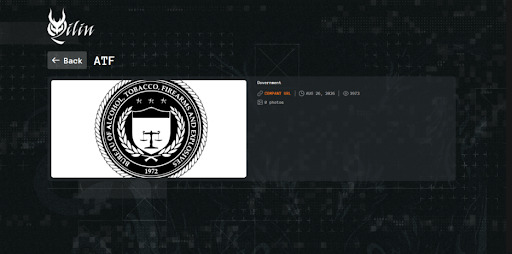
The incident was designated a “major incident,” a formal classification that requires notification to Congress under federal cybersecurity reporting requirements. Separately, the Qilin ransomware group claimed responsibility on its leak site. Later reporting stated that Qilin allegedly published approximately 6.3GB of ATF-related data; however, ATF has not confirmed Qilin attribution or the authenticity, nature, or scope of the allegedly published material.
Source & Verification Status
| Field | Assessment |
|---|---|
| Primary Source | ATF public statement confirming a cyber incident affecting a stand-alone system. |
| Actor Claim Source | Qilin ransomware leak-site claim, as cited in public reporting. |
| Observed | Claim and related reporting surfaced around 26–27 August 2026. |
| Proof Provided by Actor | Initial reporting stated that no public proof was provided. Later reporting stated that Qilin allegedly published approximately 6.3GB of ATF-related data. |
| Independently Confirmed | ATF confirmed the incident, the stand-alone nature of the affected system, and that the broader enterprise network and key ATF systems were not reportedly impacted. |
| Not Confirmed | ATF has not confirmed Qilin attribution or the authenticity, nature, or full scope of the allegedly leaked material. |
| Verification Status | Partially Corroborated |
| Confidence Rating | Medium for the confirmed ATF cyber incident; Low to Medium for Qilin attribution and alleged data exposure. |
Threat Actor Claim
The Qilin ransomware group allegedly listed ATF on its leak site and claimed responsibility for the incident. Initial reporting stated that the actor did not provide evidence to support the claim. Subsequent reporting stated that Qilin later published an alleged ATF data set of approximately 6.3GB. The contents were described as potentially including case-related files, phone-related records, account details, mobile-device extractions, and digital forensic evidence. ATF has not confirmed the authenticity, nature, or scope of the material, and has not publicly attributed the incident to Qilin.
Technical Analysis
- Affected: One stand-alone ATF system operating separately from the bureau’s broader enterprise network.
- Reportedly associated environment: Public reporting described the affected environment as a legacy, stand-alone system associated with ATF’s CALEA-related function. This has not been independently confirmed by ATF in the reviewed reporting.
- Not reportedly affected: ATF stated there was no indication that the enterprise network, ATF eForms system, case management systems, laboratory systems, or other ATF systems were impacted.
- Unknown: The initial access vector, attacker tooling, persistence method, and data-exfiltration path have not been publicly confirmed.
Potential Impact
- Potential exposure of sensitive investigative information if the alleged data publication is validated.
- Possible phishing, impersonation, intimidation, or social engineering risks involving individuals or entities referenced in investigative records.
- Potential operational sensitivity if leaked material includes law-enforcement investigative details, phone-related records, forensic artifacts, or information about investigation targets.
- Reputational and compliance impact related to the formal “major incident” designation and congressional notification requirements.
Assessment
Claimed by the Actor
- Qilin claims responsibility for the cyberattack affecting ATF.
- The actor allegedly listed ATF on its ransomware leak site on or around 26 August 2026.
- Later reporting stated that Qilin allegedly published approximately 6.3GB of ATF-related data.
- The actor’s access level, initial access vector, exfiltration method, ransom demand, and operational impact remain unverified.
Confirmed Independently
- ATF confirmed a cyber incident affecting one stand-alone system.
- ATF stated there was no indication that the enterprise network, eForms system, case management systems, laboratory systems, or other ATF systems were affected.
- ATF reportedly disconnected the affected environment and initiated incident-response and forensic activities.
- ATF stated that its ability to perform its missions was not impacted.
- The incident was designated a “major incident,” requiring notification to Congress.
- ATF has not confirmed Qilin attribution or the authenticity, nature, or scope of the allegedly leaked material.
Recommendations / Mitigations
For End Users
- Remain alert for phishing attempts referencing ATF, law enforcement activity, investigations, subpoenas, warrants, or official government communications.
- Verify unexpected outreach through official channels before providing personal information or responding to requests.
- Change reused or potentially exposed passwords, especially where accounts may intersect with government, legal, or investigative communications.
- Enable multi-factor authentication or passkeys where available.
- Report suspicious communications to the relevant security or legal contact for review.
For Organizations and Defenders
- Review authentication telemetry for abnormal access attempts, suspicious sign-ins, or unusual activity associated with sensitive systems.
- Validate network segmentation and access controls for stand-alone, legacy, or sensitive environments.
- Reset credentials and revoke active sessions for accounts with access to affected or related systems, where appropriate.
- Monitor for phishing or extortion activity using themes related to ATF, law enforcement investigations, or leaked records.
- Preserve relevant logs, access records, and endpoint evidence for forensic and legal review.
