
 HQ/EMEAFind out how we can help your business

On April 19, 2026, threat actor ShinyHunters administrator of the dark web forum BreachForums claimed responsibility for a data breach involving Vercel, a U.S.-based technology company. As part of the claim, the actor alleged possession of verified access keys that could potentially enable a global supply chain attack.
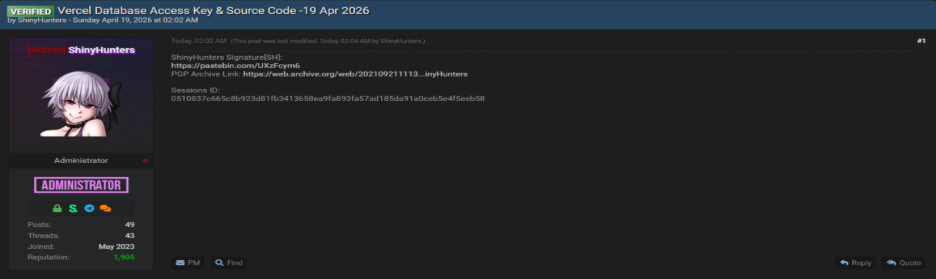

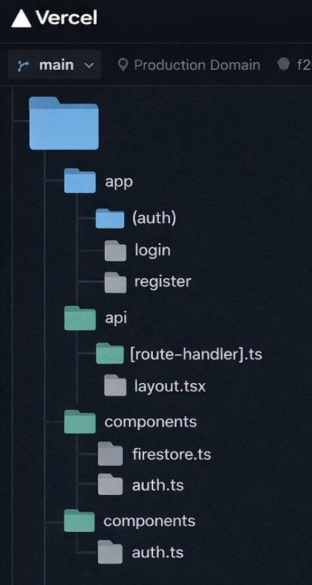
The threat actor further claimed to have access to multiple employee accounts, which allegedly provided entry to several internal deployments, as well as API keys, including some associated with npm and GitHub tokens.
Threat Actor Claims
The threat actor ShinyHunters claims to have obtained the following data from Vercel:
- Approximately 170,000 employee-related records
- A sample dataset containing internal user directory information
- Access to internal company API data and exported user directory systems
Extortion Demand
- Extortion Demand Reduced from $250K to $100K
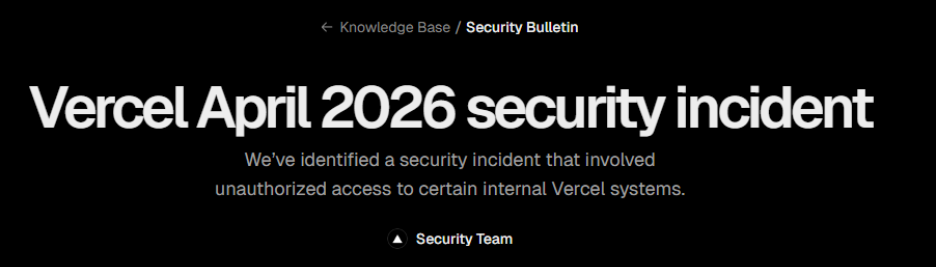
On the same day, Vercel publicly acknowledged the security incident through an official disclosure, outlining key details regarding the nature of the compromise and the scope of the affected data.
Timeline of Updates
| Date | Update |
|---|---|
| April 20, 5:32 PM PST | Validated npm packages are not compromised, added guidance for multi-factor authentication, shipped product enhancements. |
| April 20, 10:59 AM PST | Further clarified the definition of compromised credentials and added new Recommendations. |
| April 19, 6:01 PM PST | We published information about the origin of the attack and added new Recommendations. |
| April 19, 11:04 AM PST | We published an IOC to support the wider community in the investigation and vetting of potential malicious activity in their environments. |
What happened
The incident originated from the compromise of Context.ai, a third-party AI tool used by an employee of Vercel. The attacker leveraged this access to take over the employee’s Google Workspace account, enabling unauthorized access to certain Vercel environments and environment variables that were not designated as “sensitive.”
Environment variables classified as “sensitive” within Vercel are stored using enhanced protections that prevent them from being accessed in plaintext. At this time, there is no evidence to suggest that these protected values were accessed.
Vercel has assessed the threat actor as highly sophisticated, citing rapid operational execution and a detailed understanding of its internal systems. The company is actively collaborating with Mandiant, additional cybersecurity partners, industry peers, and law enforcement. It has also engaged Context.ai directly to determine the full scope of the underlying compromise.
In coordination with GitHub, Microsoft, npm, and Socket, the security team confirmed that no npm packages published by Vercel were compromised. There is no evidence of tampering, and the software supply chain is believed to remain secure.
Impact
Vercel identified a limited subset of customers whose non-sensitive environment variables stored in a format that can be decrypted to plaintext may have been compromised. The company has directly notified affected customers and recommended the immediate rotation of credentials.
The investigation remains ongoing to determine whether any data was exfiltrated and to assess the full scope of impact. Vercel stated that it will notify customers if further evidence of compromise is identified. In the meantime, the company has deployed enhanced security measures and increased monitoring and confirmed that its services remain operational.
Recommendations
While Vercel continues to implement measures to protect its systems and customers, users are advised to follow these best practices:
Enable multi-factor authentication (MFA): Add an extra layer of protection by requiring at least two forms of authentication.
- Configure an authenticator app and create passkeys where available.
Environment Variable Security
Deleting projects or accounts does not eliminate risk, as compromised secrets may still grant access to production systems.
- Rotate exposed credentials: Review and rotate all environment variables not marked as “sensitive,” including API keys, tokens, database credentials, and signing keys, as these should be treated as potentially exposed.
- Use sensitive variable protections: Ensure that all secret values are properly classified to prevent plaintext access in the future.
Additional Measures
- Review activity logs: Check account and environment logs for any suspicious or unauthorized activity via the dashboard or CLI.
- Audit recent deployments: Investigate for unusual or unauthorized deployments and remove any suspicious instances.
- Enforce deployment protection: Ensure that Deployment Protection is set to at least “Standard.”
- Rotate deployment tokens: Update Deployment Protection tokens to prevent unauthorized access.
For help or other technical support, contact us through vercel.com/help.
Indicators of compromise (IOCs)
The investigation revealed that the root cause involved a compromised Google Workspace OAuth application associated with a third-party AI tool, potentially affecting multiple organizations.
OAuth App ID:
110671459871-30f1spbu0hptbs60cb4vsmv79i7bbvqj.apps.googleusercontent.com
Organizations using Google Workspace are advised to review and validate any usage of this application.
Security Improvements
Vercel has rolled out security-focused improvements, including making environment variables “sensitive” by default, enhancing team-level management controls, improving activity log usability for better visibility, and refining team invitation emails to reduce potential security risks.
Vercel’s Role in Modern Web Development and Software Supply Chain Security
Vercel is important because it is a major platform used to deploy and host modern web applications.
It plays a critical role in software development since it connects code repositories (like GitHub) to production websites, often through automated deployment pipelines. Many developers also rely on it for serverless functions and frontend hosting, especially with frameworks like Next.js.
It is considered a key part of the software supply chain. This makes it both highly valuable for developers and a potential high-impact target in security contexts.
Conclusion
At present, the situation reflects a low-to-moderate confidence incident of potential credential exposure, with no confirmed supply chain compromise. The coordinated verification by multiple ecosystem stakeholders (GitHub, npm, Microsoft, Socket) significantly strengthens the integrity assurance of the software supply chain.
Sources
https://breachforums.ai/Thread-VERIFIED-Vercel-Database-Access-Key-Source-Code-19-Apr-2026
