
 HQ/EMEAFind out how we can help your business


Overview
A security researcher operating under the alias Nightmare-Eclipse has reportedly been removed from GitLab following the public disclosure of alleged unpatched Windows zero-day exploits.
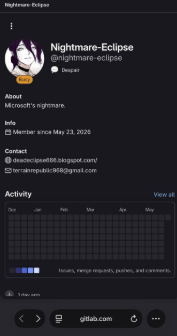
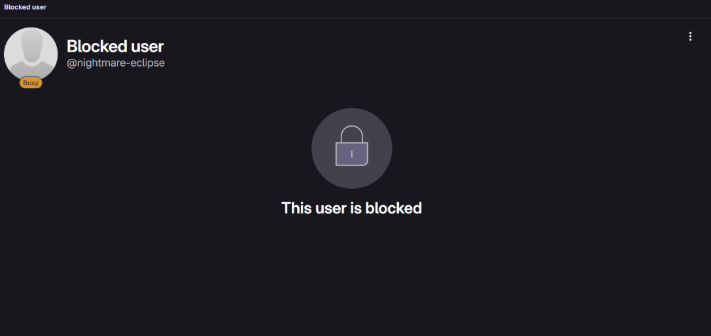
Following the removal, the researcher published multiple PGP-signed statements accusing Microsoft and the Microsoft Security Response Center (MSRC) of mishandling vulnerability disclosures, revoking reporting access, suppressing repositories, and escalating disputes with researchers.
The activity references several exploit projects allegedly tied to Windows vulnerabilities, including:
- BlueHammer
- Local privilege escalation (LPE) to NT AUTHORITY\SYSTEM via a TOCTOU race condition in Microsoft Defender’s signature update process. It uses oplocks, NTFS junctions/symbolic links, Cloud Files API, and Volume Shadow Copies to redirect Defender’s privileged read operations to the SAM database for credential dumping and elevation. Patched in April 2026 Patch Tuesday; observed in real-world attacks.
- RedSun
- Another Defender-based LPE to SYSTEM, similar in technique to BlueHammer but focused on privileged file write. It triggers Defender remediation (often via embedded EICAR test string) and redirects the write to overwrite/place a malicious binary (e.g., TieringEngineService.exe) for SYSTEM execution. Worked on patched systems post-April updates; used in intrusions alongside BlueHammer. CVE-2026-41091 (LPE, exploited in the wild).
- YellowKey
- BitLocker bypass requiring physical access. Places crafted files (e.g., “FsTx” folder) on a USB or EFI partition, boots into Windows Recovery Environment (WinRE), and triggers vulnerable recovery behavior to gain unrestricted access to the encrypted volume. Described by the researcher as one of their most significant finds; affects TPM-only configurations. CVE-2026-45585 (security feature bypass).
- UnDefend
- Defender degradation/disabling tool (not a direct LPE). Disrupts definition updates and service restarts using multiple locking mechanisms, progressively reducing detection capabilities and blinding the AV to subsequent attacker activity. Often chained with BlueHammer/RedSun for defense evasion. CVE-2026-45498 (DoS/degradation, also exploited).
- GreenPlasma (Partial PoC)
- Local privilege escalation targeting ctfmon.exe (a trusted SYSTEM process for text input). Manipulates registry and object manager permissions to plant a memory section that the trusted process interacts with, leading to elevation. Released as a partial exploit (final SYSTEM shell stage withheld as a challenge). Unpatched.
- MiniPlasma (New)
- Local privilege escalation via a race condition tied to an incomplete 2020 fix (Cloud Filter driver). Works on fully patched Windows 11 systems as a standard user to achieve SYSTEM. Described as relatively straightforward compared to others. Unpatched.
Some repositories and associated materials are no longer publicly accessible.
About Msrc
The Microsoft Security Response Center (MSRC) manages vulnerability disclosure, patching, and coordinated security response operations involving Microsoft products.
Post Metadata
- Researcher Alias: Nightmare-Eclipse
- Affected Vendor: Microsoft
- Platform Action: Removal from GitLab
- Activity Type: Public disclosure of alleged Windows exploits
- Referenced Exploits:
- BlueHammer
- RedSun
- YellowKey
- UnDefend
- Threat Level: Moderate to High
Disclosure And Escalation
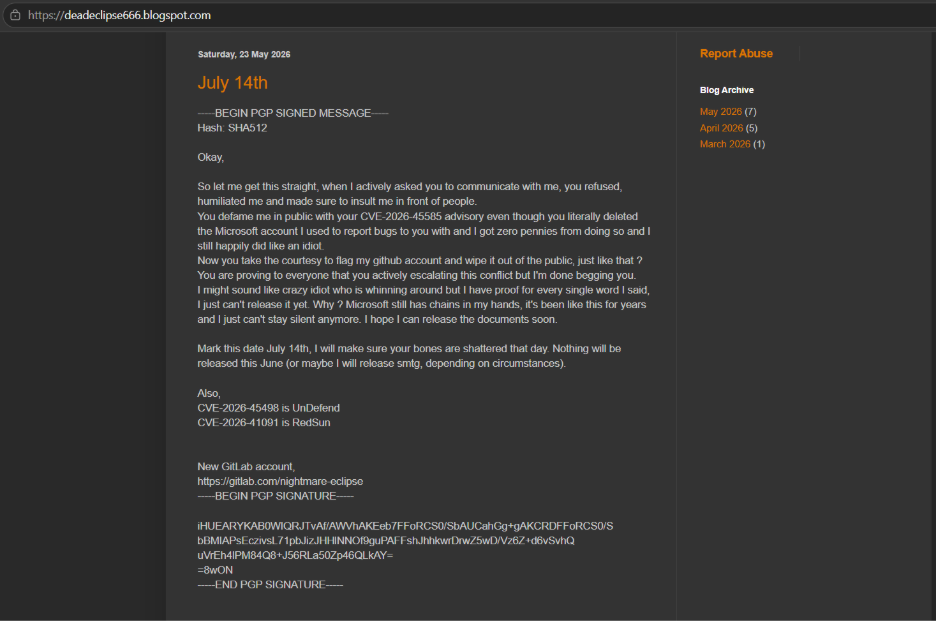
The researcher publicly referenced multiple CVEs allegedly tied to Windows vulnerabilities, including:
- CVE-2026-45585
- CVE-2026-45498 (“UnDefend”)
- CVE-2026-41091 (“RedSun”)
In messages associated with the GitLab activity, the researcher issued a deadline and pointed warning: Mark July 14, 2026. They indicated plans for a major release or escalation on that date, potentially a particularly damaging exploit or set of vulnerabilities while also alluding to a “dead man’s switch” mechanism to ensure further disclosures if action is taken against them.
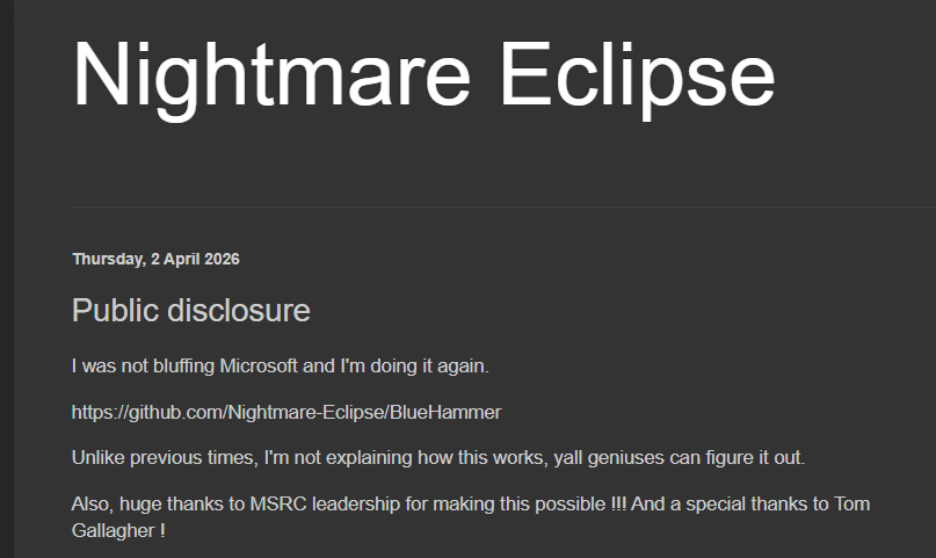
A repository allegedly linked to “BlueHammer” was reportedly published in April 2026 before later becoming inaccessible.
The researcher also referenced “YellowKey,” claiming the exploit involved deep Windows internals and remained effective even in some TPM+PIN environments. These claims remain independently unverified.
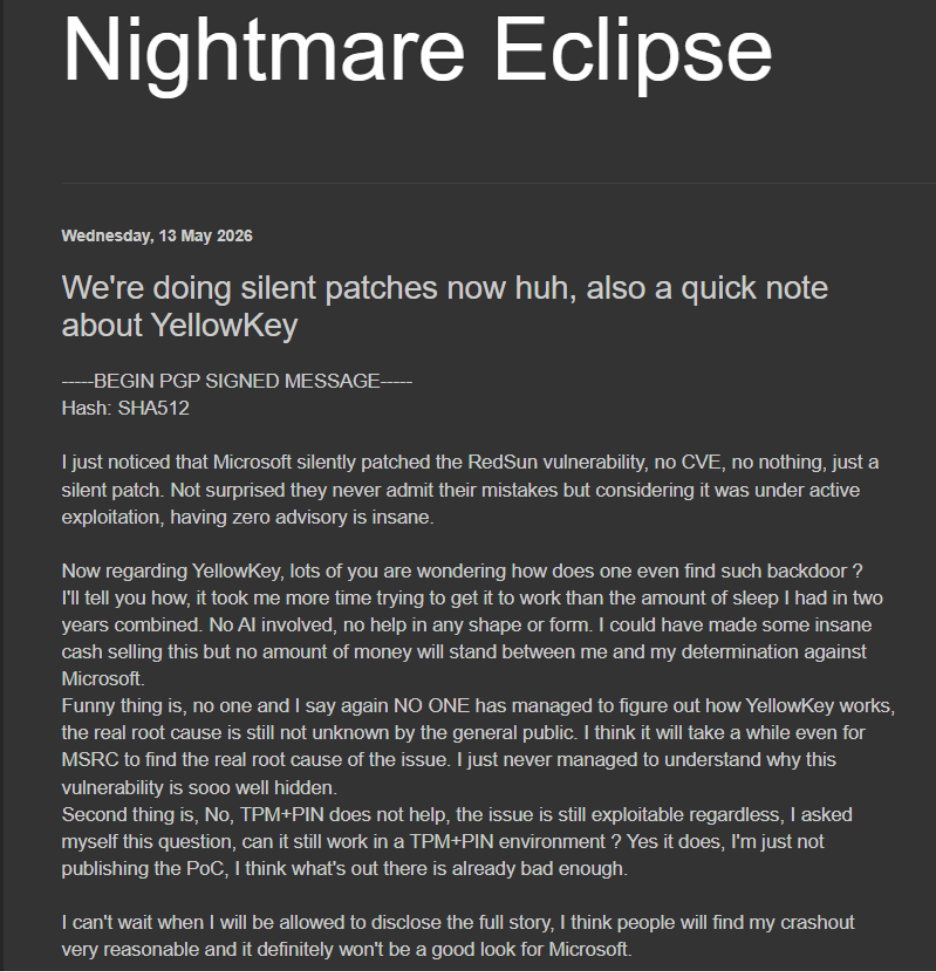
In later statements, the researcher accused Microsoft and MSRC of:
- Ignoring vulnerability reports
- Revoking MSRC reporting access
- Removing repositories
- Mishandling disclosure communications
- Damaging the researcher’s reputation through advisory language
The researcher specifically disputed Microsoft’s statement regarding coordinated vulnerability disclosure (CVD) practices tied to “YellowKey.”
Microsoft publicly stated:
“Microsoft is aware of a security feature bypass vulnerability in Windows publicly referred to as ‘YellowKey’.”
The researcher interpreted the advisory wording as retaliatory following repository removals and disclosure disputes.
The statements also referenced potential future disclosures involving Remote Code Execution (RCE) exploit material.
Osint Findings
OSINT analysis identified:
- Public Blogspot-hosted disclosure posts
- PGP-signed statements
- GitHub repository removals
- Community reposts and exploit discussions
- Independent analysis attempts surrounding “BlueHammer” and “RedSun”
Security community discussions also referenced:
- Patch reliability concerns
- Reuploaded proof-of-concept material
- Claims involving silent mitigation activity
- Ongoing debate regarding disclosure handling practices
At the time of writing, Microsoft has not publicly issued a detailed response addressing all allegations raised by the researcher.
Mitre Att&ck Context
| Tactic | Technique | ID | Description |
|---|---|---|---|
| Privilege Escalation | Exploitation for Privilege Escalation | T1068 | Exploitation of vulnerable Windows components to obtain elevated privileges or SYSTEM-level access |
| Defense Evasion | Impair Defenses | T1562 | Attempts to disable, bypass, or weaken Windows security protections and monitoring controls |
| Credential Access | OS Credential Dumping | T1003 | Potential access to sensitive authentication material and credential stores within Windows environments |
| Persistence | Boot or Logon Autostart Execution | T1547 | Techniques allowing malicious code or unauthorized processes to persist after reboot or user logon |
| Impact | Data Manipulation | T1565 | Potential modification or tampering of system data, security configurations, or operational processes |
Indicators And References
Referenced exploit names:
- BlueHammer
- RedSun
- YellowKey
- UnDefend
- GreenPlasma (Partial POC)
- MiniPlasma (New)
Referenced CVEs:
- CVE-2026-45585
- CVE-2026-45498
- CVE-2026-41091
Observed platforms:
- GitHub
- Blogspot
- GitLab
Assessment
The incident reflects an escalation from vulnerability research activity into a public dispute involving disclosure practices, repository removals, and retaliatory messaging.
While other exploit claims remain unverified, the following factors increase operational concern:
- Public release of exploit-related material
- Repeated references to Windows security bypasses
- Continued publication of signed statements
- Ongoing circulation of exploit discussions across security communities
The incident also highlights the risks associated with breakdowns in coordinated vulnerability disclosure processes, particularly when exploit material becomes publicly accessible before remediation or validation efforts conclude.
Recommendations
For Organizations
- Monitor Microsoft advisories and patch releases
- Review BitLocker and TPM-related hardening policies
- Enable advanced endpoint telemetry and behavioral detections
- Monitor for privilege escalation and defense evasion activity
For Security Teams
- Track discussions related to BlueHammer, RedSun, and YellowKey
- Monitor code-sharing sites for reposted proof-of-concept material
- Watch for exploit chaining behavior targeting Windows environments
The information provided in this article is based on publicly available open-source intelligence (OSINT). It is intended for awareness and defensive cybersecurity purposes only.
