
 HQ/EMEAFind out how we can help your business


Disarming Microsoft Defender, Abusing Trusted Infrastructure, and Targeting Cryptocurrency Users
Table of Contents
- Executive Summary
- Strategic Impact for Leadership
- Key Findings
- Threat Actor Profile & Attribution Assessment
- Attack Chain
- Basic Details
- Campaign Identity and Masquerading
- Static File Identification
- How the Malware Reaches Victims
- Evading Detection Before Anything Malicious Happens
- Disabling Windows Security Protections
- Hidden Configuration and Communication Details
- Delivery Infrastructure
- Targeting Cryptocurrency Wallet Users
- Reporting Back to the Attacker
- Second-Stage Malware: Family One
- Second-Stage Malware: Family Two
- Confirmed Behaviour From a Controlled Detonation
- Wider Operator Infrastructure
- Publisher Information
- MITRE ATT&CK Mapping
- Indicators of Compromise (IOCs)
- Recommendations
- Conclusion
- Appendix: Detection Rule (YARA)
Executive Summary
We at iZOOlogic has discovered an active malware campaign that distributes a Windows installer disguised as a desktop client for a genuine, well known AI coding model. Victims who download and run the file receive a loader that quietly checks whether it is running on a real victim machine, disables key parts of Microsoft Defender and the Windows Firewall, then downloads and runs additional malicious programs supplied by the operator. The loader’s delivery and configuration chain relies heavily on legitimate, high-reputation online services rather than from any attacker owned server, which lets the campaign blend into normal network traffic and avoid domain reputation-based detection almost entirely.
The associated infrastructure shows activity under a single publisher account spanning close to a year. The campaign shows a clear financial-theft targeting objective: the loader specifically checks for cryptocurrency wallet software and fetches an additional payload only when one is present. Five distinct second stage programs were identified, falling into two related families, together installing durable persistence, opening network tunnels, and harvesting browser data once a machine is fully compromised. The same publisher account is linked to other malicious and trojanized software distributed from the same infrastructure. This report sets out the full attack chain, the supporting technical evidence gathered during analysis, and the indicators and recommendations needed to detect and contain this campaign.
Strategic Impact for Leadership
- Abuse of AI Software Demand: Threat actors are actively exploiting the high demand for AI development tools. By masquerading malware as a legitimate, open-source AI coding client, attackers are bypassing traditional skepticism and gaining initial access directly from developers and technical staff.
- Abuse of Trusted Infrastructure: This campaign relies entirely on ‘Living Off Trusted Sites’ (LOTS). This campaign relies entirely on “Living Off Trusted Sites” (LOTS), utilizing high-reputation platforms like Pastebin and public cloud repositories for command and control. This renders traditional domain-reputation blocking and web filters ineffective, requiring a shift toward behavioral and endpoint telemetry.
- Targeted Cryptocurrency Theft:Unlike broad ransomware or infostealers, this loader features a hardcoded trigger specifically targeting Ledger Live cryptocurrency wallets. Unlike broad ransomware or infostealers, this loader features a hardcoded trigger specifically targeting cryptocurrency wallets. Organizations and individuals utilizing hardware or software crypto wallets are at a direct, elevated risk of targeted financial theft.
Key Findings
- A fake AI coding tool, distributed through a convincing public repository page complete with a licence, benchmark charts and a published checksum, is used to gain initial access.
- A fifty two signal scored detection system checks for virtual machines, sandboxes and analysis software before any malicious activity begins, and a fourteen-point human activity check defeats automated detonation.
- Ten Microsoft Defender protections are disabled and three inbound firewall ports are opened through a hidden background process once both checks are passed.
- Every operational secret, six web addresses, an access token, a messaging channel identifier and a campaign tag, is protected by a custom, multi-layered encryption scheme.
- Instructions and second-stage packages are resolved through a delivery chain that heavily abuses legitimate, high-reputation infrastructure, including paste-sharing and public cloud-development services.
- An additional payload is fetched only when a cryptocurrency wallet application is present on the victim machine, an explicit financial targeting mechanism.
- Five second-stage programs were identified across two families: one that communicates directly with a messaging platform and installs persistence through native Windows automation interfaces, and one built from mostly filler data that reads but does not act on its own decoy configuration.
- A controlled detonation of the full chain confirmed eight separate autostart mechanisms, tunnelling and relay tooling, and cross-browser credential harvesting through disposable browser profiles.
- The distribution repository and the operator’s cloud development project are linked to a single publisher account active for close to a year, hosting other malicious and trojanized software alongside this campaign’s own packages.
- The campaign’s live infrastructure, its reporting endpoint, instruction manifest and access token links, was independently confirmed active at the time of this report.
Threat Actor Profile & Attribution Assessment
While definitive attribution of the individuals behind “Operation Phalanx Shield” is constrained by the use of disposable infrastructure, the campaign’s technical fingerprint, operational cadence, and targeting logic provide a clear profile of the threat actor:
- Financially Motivated Activity: The loader conditionally retrieves an additional payload when Ledger Live is detected, providing direct evidence of deliberate cryptocurrency-targeting behavior. This supports a financially motivated objective, although the identity and organisational structure of the operators remain unresolved.
- Russian-Language Development Indicators: Two of the three Family One samples contain native Russian-language debug and status strings embedded directly in the binaries. These strings provide evidence of a Russian-language development environment or developer lineage, but they do not establish the developers’ geographic location, nationality, or affiliation with a specific threat group.
- Reusable Malware-Delivery Infrastructure: The associated cloud-development project shows sustained activity across multiple malicious and trojanized software packages, including this campaign, a malicious AI application, and trojanized remote-access utilities. This suggests a reusable malware-delivery infrastructure rather than a single-purpose campaign. The available evidence does not establish whether access is sold, leased, or provided to other operators.
Attack Chain
The diagram below summarises the full attack chain from initial delivery through to second-stage execution, including the two points at which the malware silently exits if it detects an analysis environment or a lack of genuine user activity.
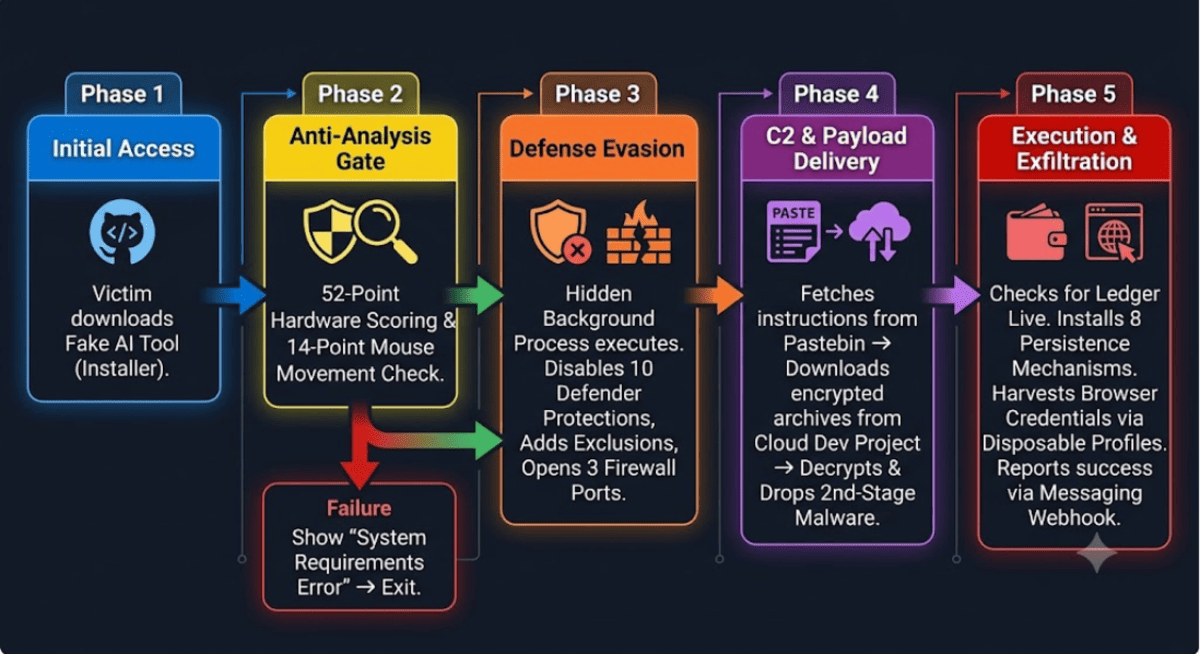
The campaign’s full attack chain, from delivery through second-stage execution.
Basic Details
| Target Technologies | Windows Operating System (x64) |
| Threat Type | Malicious loader and multi-stage downloader, fake AI application lure |
| File Types | EXE (PE32+, GUI subsystem), 7Z (password-protected archive) |
| Observed First | 19 August 2026 (installer build date); operator infrastructure active for close to a year |
| Impact | Microsoft Defender neutralisation, firewall modification, second-stage malware execution |
| Installer SHA-256 | 0f6c506f7616965500f242819fb13aee6459fad1e08624b871219b2859b0a493 |
Campaign Identity and Masquerading
The installer’s own internal file information does not match the product it claims to be. Its version details name a completely different product, “Phalanx Shield” by a company calling itself “Spartan Solutions”, describe it in one field as a “collaborative data sharing network for team based awareness” and in another as an “automatic hardware driver update tool”, and its internal debug information refers to a project called simply “Updater”. None of these separate identities match the file’s own name or its apparent purpose as an AI coding tool. While running, the installer displays the message “PROCESSING DRIVER” on screen while silently downloading and running content in the background. These strings are stored in a Unicode format inside the file’s resource section, which is why a simple text search of the file does not find them; they were confirmed by direct inspection, shown below together with the file’s identifying hash.
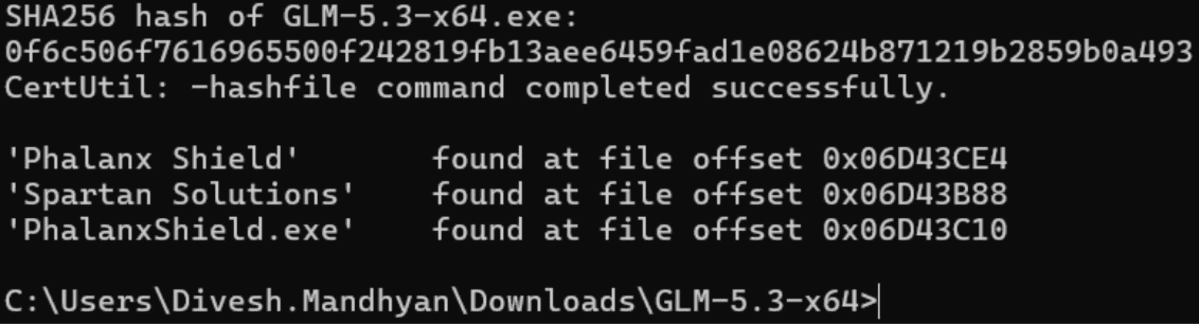
Terminal output independently confirming the installer’s file hash and the hidden, Unicode-encoded version strings described above.
The program’s entry point, the very first code that runs, is an entirely ordinary, unmodified startup routine of the kind produced automatically by standard development tools. There is no unpacking step, no hidden decoding loop and no anti-analysis check anywhere near it, confirming that whatever protects this installer from casual inspection happens later, not at launch.
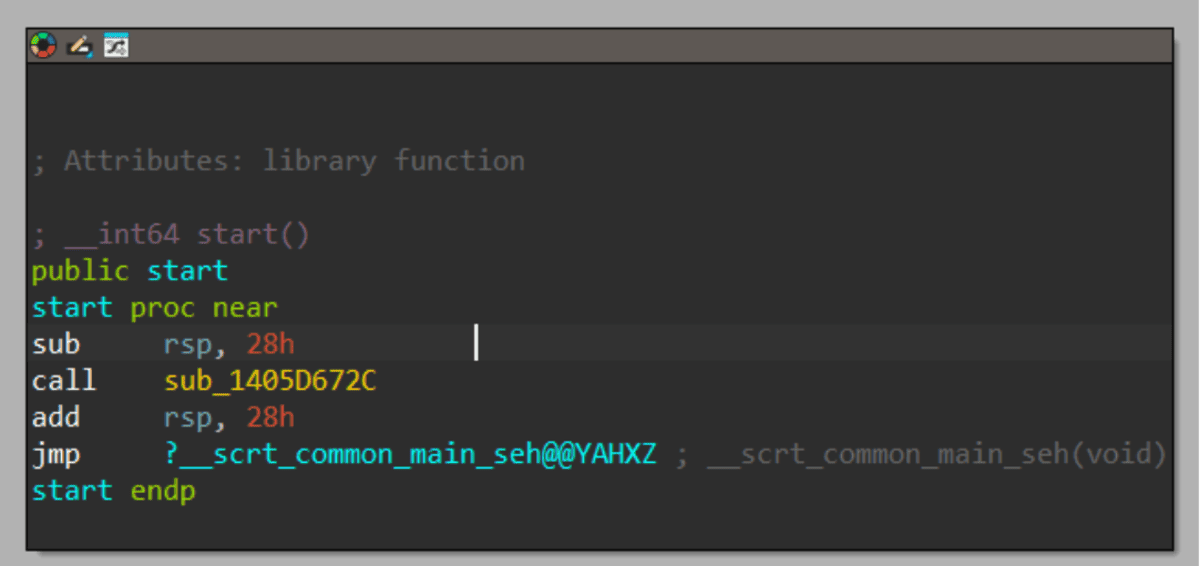
The installer’s program entry point, shown to be a standard, unmodified startup routine rather than a custom unpacking stub.
Static File Identification
A file identification pass over the installer independently confirms several details already established from the version resource: the file is a 64-bit Windows PE executable of 109.37 MiB, built with a genuine Microsoft Visual C++ toolchain and linker and language characteristics consistent with Rust-based compilation, and compiled on 19 August 2026, the same build date already recorded in this report.
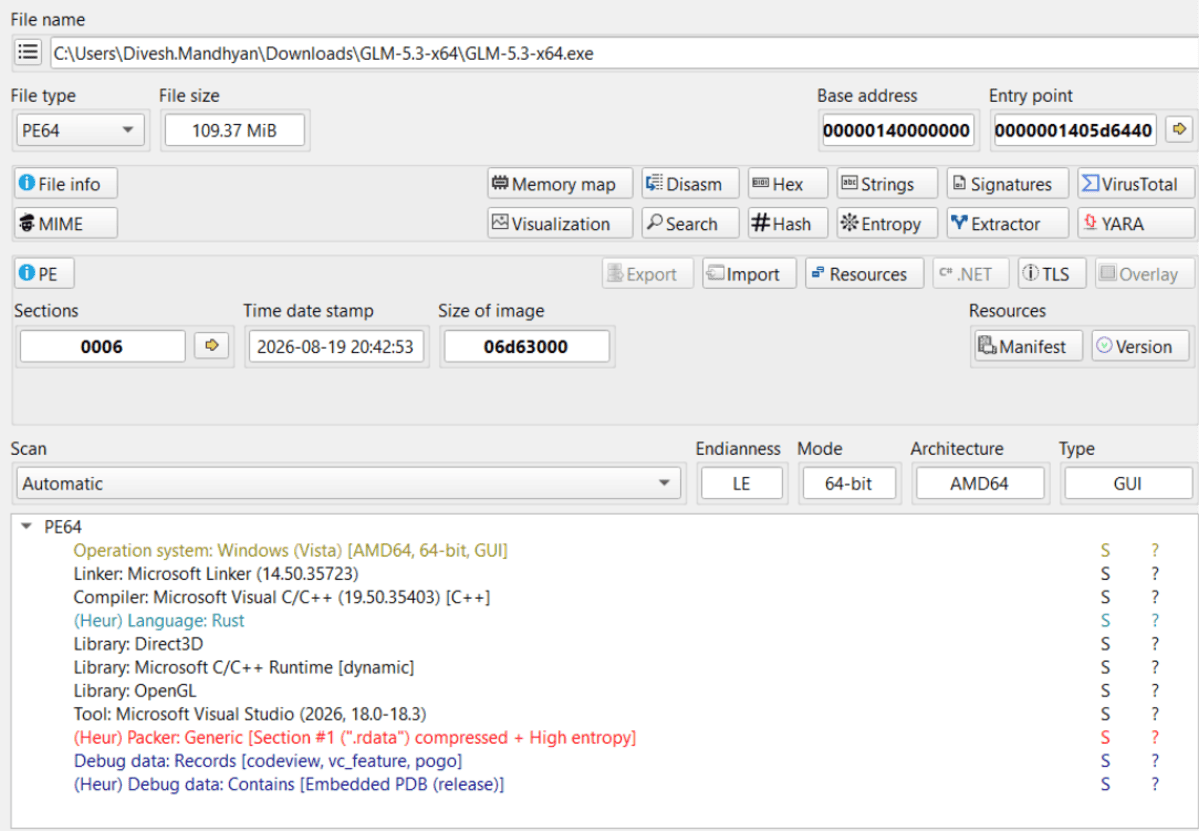
File identification output for the installer, confirming its size, build date, and the toolchain used to produce it.
The same pass also flags three sections, the resource, exception and portions of the read-only data sections, as high entropy and potentially packed. This is consistent with, rather than contrary to, the findings already documented in this report: it is exactly where the custom-encrypted configuration blob and the compiled Rust code itself would be expected to raise a generic entropy heuristic, not a separate or previously undocumented packing layer.
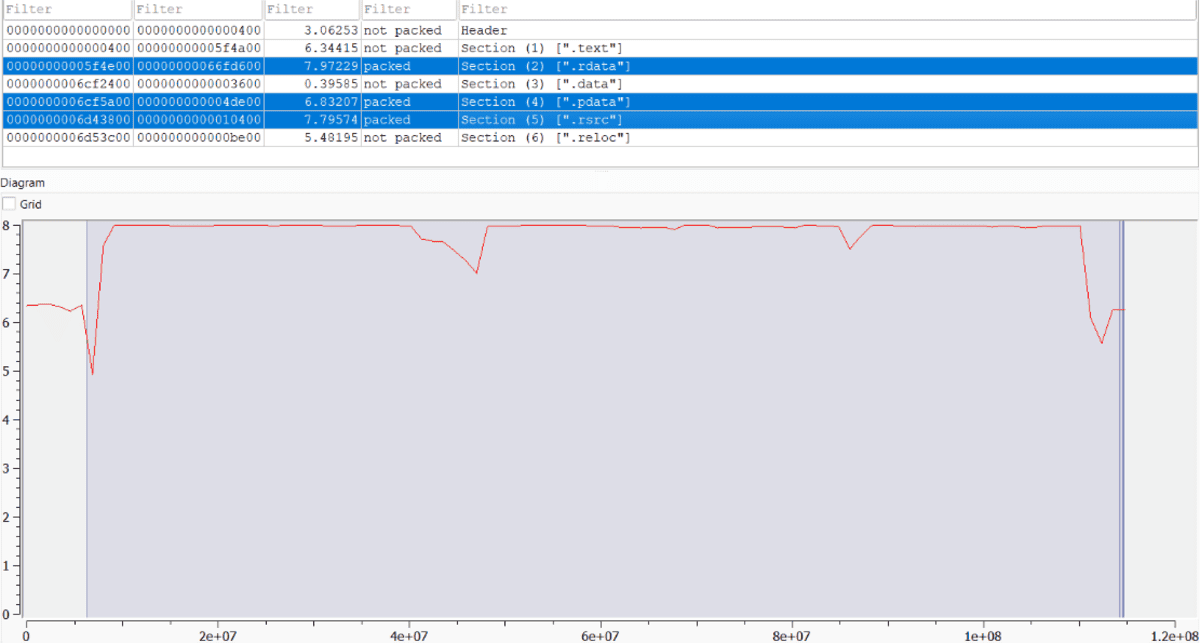
Section-by-section entropy across the file. The resource and exception-handling sections read as high entropy and are flagged as potentially packed; the code section itself reads as ordinary, unpacked native code.
How the Malware Reaches Victims
The loader is not distributed as a bare file. It is hosted behind a public, professionally presented software repository page built to look like an independent, open source desktop client for a real, well regarded AI coding model. The page carries a full feature description, a permissive open source licence, a comparison table against competing tools, a frequently asked questions section that specifically claims the download is signed and safe to install, and a download table whose Windows entry produces the exact installer file examined in this report.
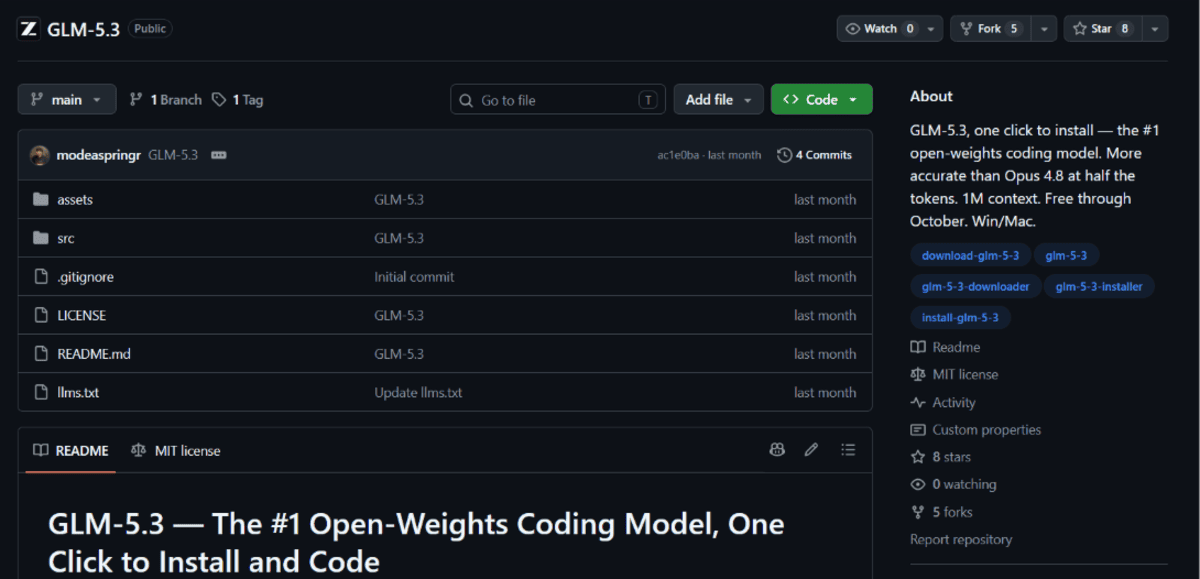
The public repository page used to distribute the malicious installer. It presents itself as an independent client for a legitimate AI coding model, complete with a licence, a file listing and a detailed description.
The download itself sits on the same page’s release section, alongside a set of benchmark charts included purely to add credibility, and is offered together with a published checksum so that a cautious visitor can appear to verify the file before running it.
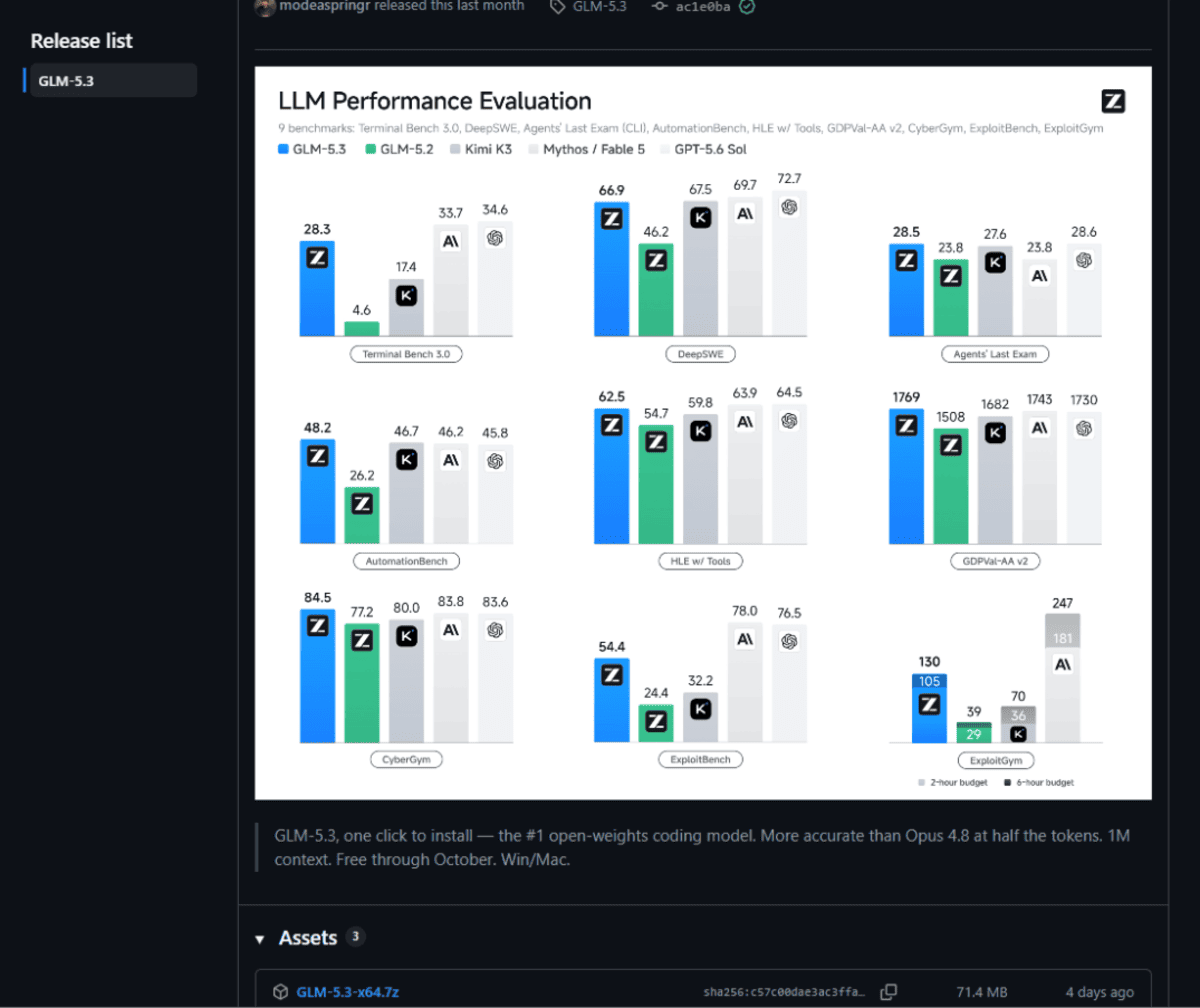
The release page offering the installer for download, together with performance charts and a published checksum intended to reassure a visitor that the file is legitimate.
A copy of the installer obtained directly for this analysis is shown below. Minor size differences between the file as published, as downloaded and as extracted are expected and are not treated as significant on their own.

The installer file as retrieved for analysis.
Evading Detection Before Anything Malicious Happens
Before doing anything harmful, the installer runs a scoring system covering ten categories, including the processor, memory, storage and graphics hardware, running processes, installed software, system firmware, and registry entries associated with virtual machines, roughly fifty two individual signals in total, all feeding one running score. Each signal adds or subtracts points, and if the total crosses a threshold the program shows a fake system requirements error message and exits without doing anything further.
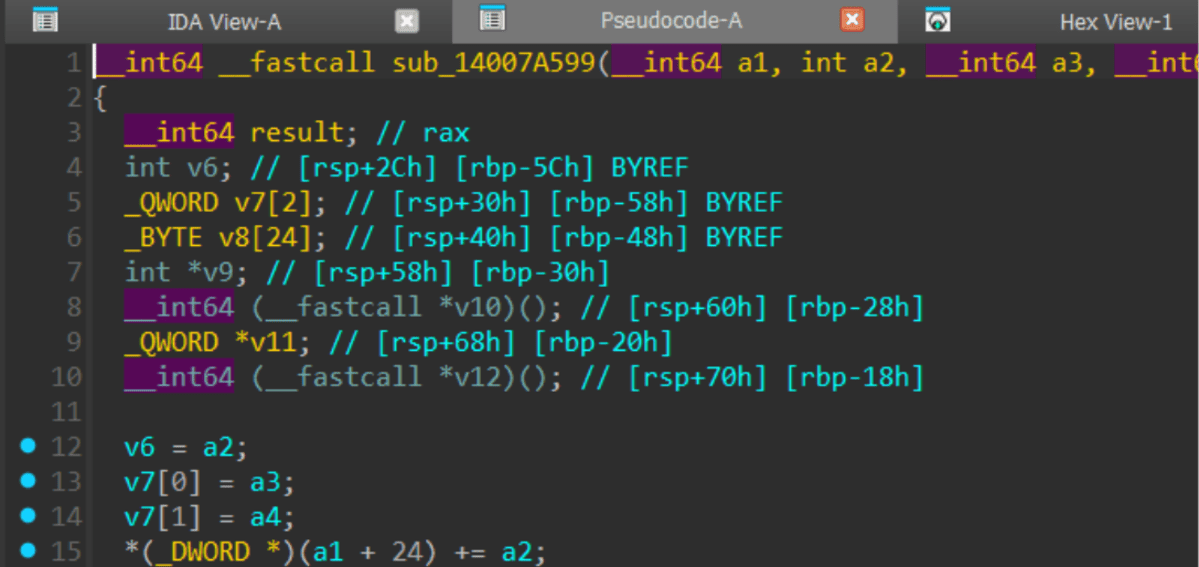
The scoring engine that totals every detection signal into a single running score. Individual signals range from strongly negative, for hardware typical of a genuine gaming machine, to strongly positive, for signs of a virtual machine or analysis environment.
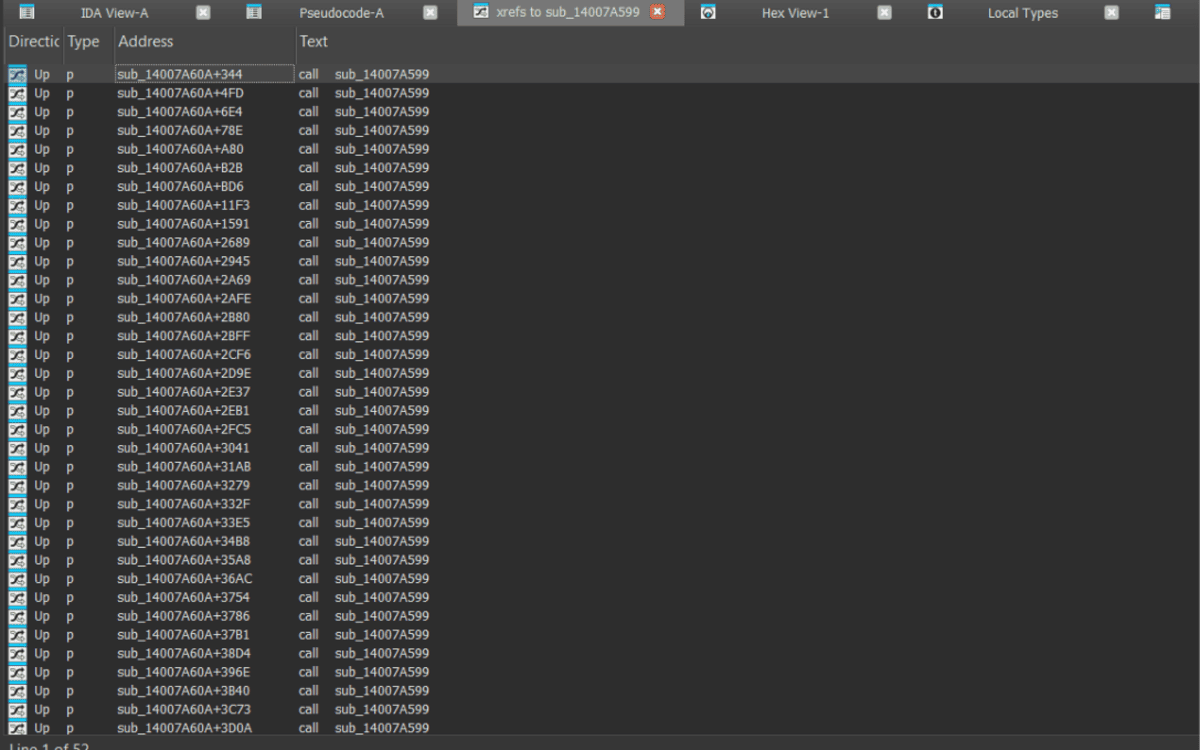
Every one of the fifty two individual checks feeding into the scoring engine, enumerated exhaustively rather than sampled.
On top of this, the installer requires genuine mouse movement across at least fourteen distinct positions within a forty four second window before it will continue. This is designed to interfere with automated malware analysis systems that execute samples without simulated user interaction. If the scoring system trips, the victim sees an entirely ordinary looking system requirements dialog rather than any indication that the program has detected an analysis environment.
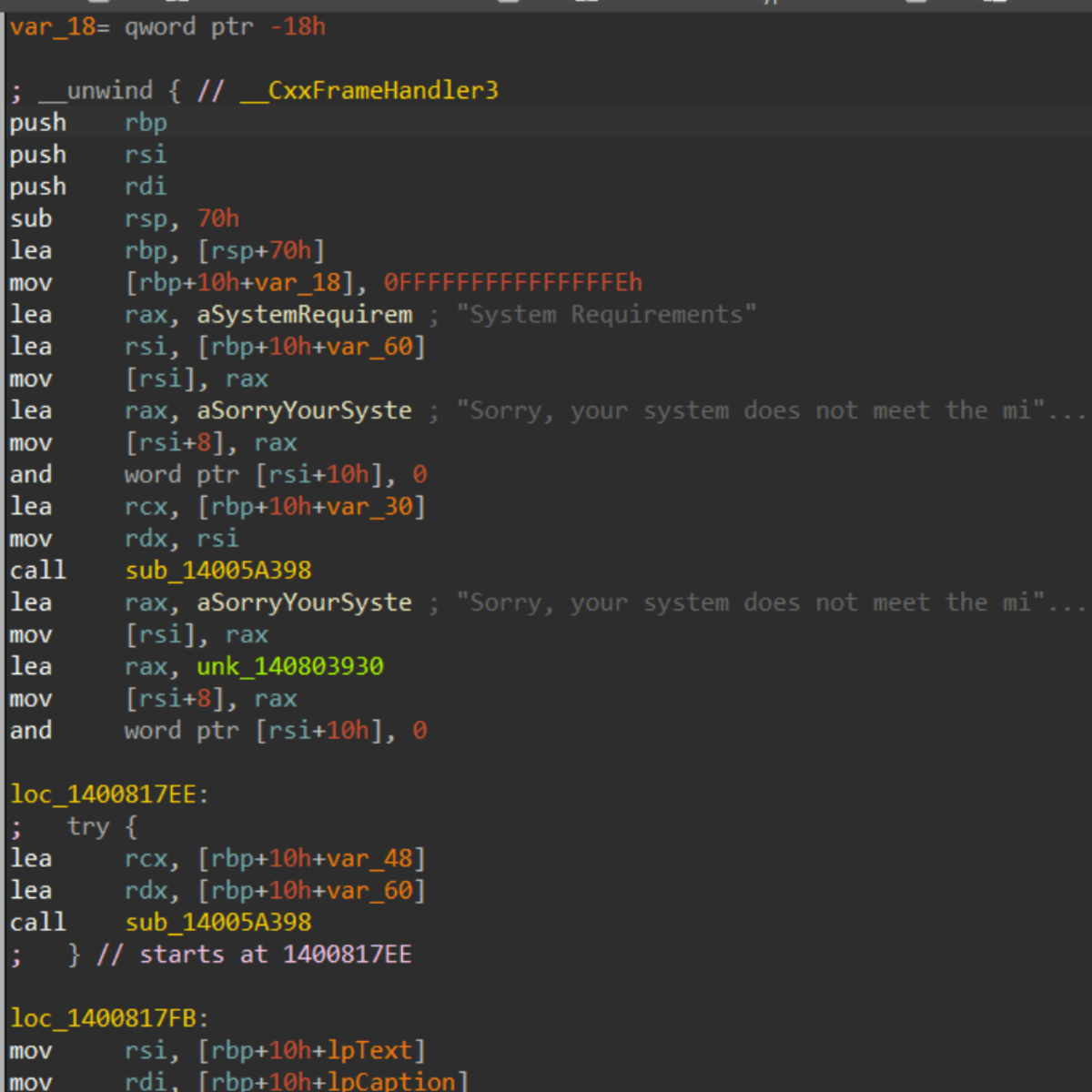
The decoy dialog shown to a victim once the detection system trips, worded to look like an ordinary compatibility message rather than a security block.
Disabling Windows Security Protections
Once both checks are satisfied, the installer launches a hidden background process that decodes and runs a script disabling ten separate Microsoft Defender protections, including behaviour monitoring and cloud based sample submission, and excluding several entire system folders from scanning altogether. The same process opens three inbound firewall ports, preparing the machine for the network activity that follows.
| Security Change | Effect |
|---|---|
| Defender exclusions added | Users, Temp, ProgramData, Public and Windows folders excluded from scanning |
| Behaviour monitoring | Turned off |
| Cloud reporting and sample submission | Turned off |
| Firewall | Three inbound ports opened (57001, 57002, 56001) |
Hidden Configuration and Communication Details
Every piece of information the loader needs to operate, six web addresses, an access token, a messaging channel identifier and a campaign tag, is stored inside the file in an encrypted form using a custom, multi layered scheme rather than in plain text. This is a deliberate step to prevent the loader’s behaviour from being read directly out of the file without first reconstructing the encryption method by hand.
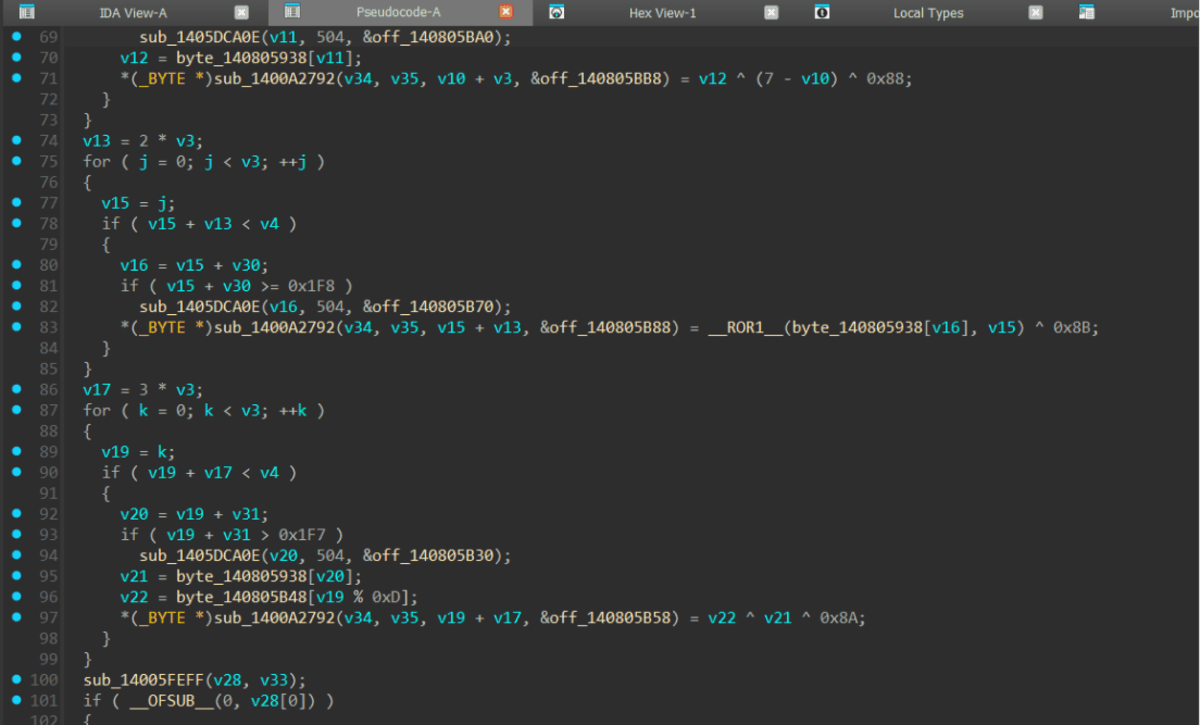
The routine responsible for decrypting the installer’s hidden configuration, combining several distinct encryption techniques across the encrypted block.
The recovered values are listed below.
| Recovered Value | Role |
|---|---|
| pastebin.com/raw/Wrac6rfr | Access token link (primary) |
| pastebin.com/raw/8PwZ7iGr | Instruction manifest link (primary) |
| 8TDk2FBsKG5UN2NNc3p | Default access token and archive password |
| hkdk.events/99cao586ez749z | Reporting endpoint |
| A negative numeric identifier | Messaging channel identifier, consistent with a group or channel rather than an individual account |
| #Soft0627 | Campaign tag |
Delivery Infrastructure
Rather than contacting a fixed control server, the loader resolves its instructions from public paste sharing websites, using a primary and a backup link for resilience. Those instructions point to password protected archive packages hosted on a legitimate, well known cloud development platform, under a public project named sagonbretzpr that requires no account to access. Eight packages have been identified so far, delivered across three separate waves. Each package is downloaded on its own thread, extracted into a freshly and randomly chosen folder and filename, and every program found inside is run automatically. Because the drop location and name are regenerated on every run, no two infections leave an identical footprint on disk.
A direct check of the loader’s own live communication links confirmed that the instruction manifest is still active and still serving the identical eight package list, that the access token link is still active and currently serving the same fallback value already recovered from the installer’s own configuration, and that the reporting endpoint is live and responding. The infrastructure remains fully operational as of this report’s publication date.
Targeting Cryptocurrency Wallet Users
The loader specifically checks whether the Ledger Live cryptocurrency wallet application is installed on the machine. When it is present, an additional payload link, not otherwise used, is retrieved and run. This is an explicit, deliberate financial targeting mechanism rather than a general purpose feature.
Reporting Back to the Attacker
Once its work is complete, the loader assembles a short report and transmits the resulting victim-status report through a webhook relay service shaped to look exactly like a message sent through a popular messaging platform’s bot service. The report includes the campaign tag, the victim’s username, their public IP address, a timestamp, whether the installer is running with administrator rights, and a full breakdown of how many packages were installed successfully against how many failed. Routing the report this way keeps the operator’s actual messaging credentials out of the file entirely, so only the relay address, not the operator’s own account, can be recovered from the installer itself.
Second-Stage Malware: Family One
Five distinct second stage programs were delivered by the loader, falling into two related families. The first family, three programs in total, communicates directly with a popular messaging platform’s bot service and independently resolves its own backup communication links from paste sharing sites. All three share the same underlying startup routine, confirming a common development lineage.
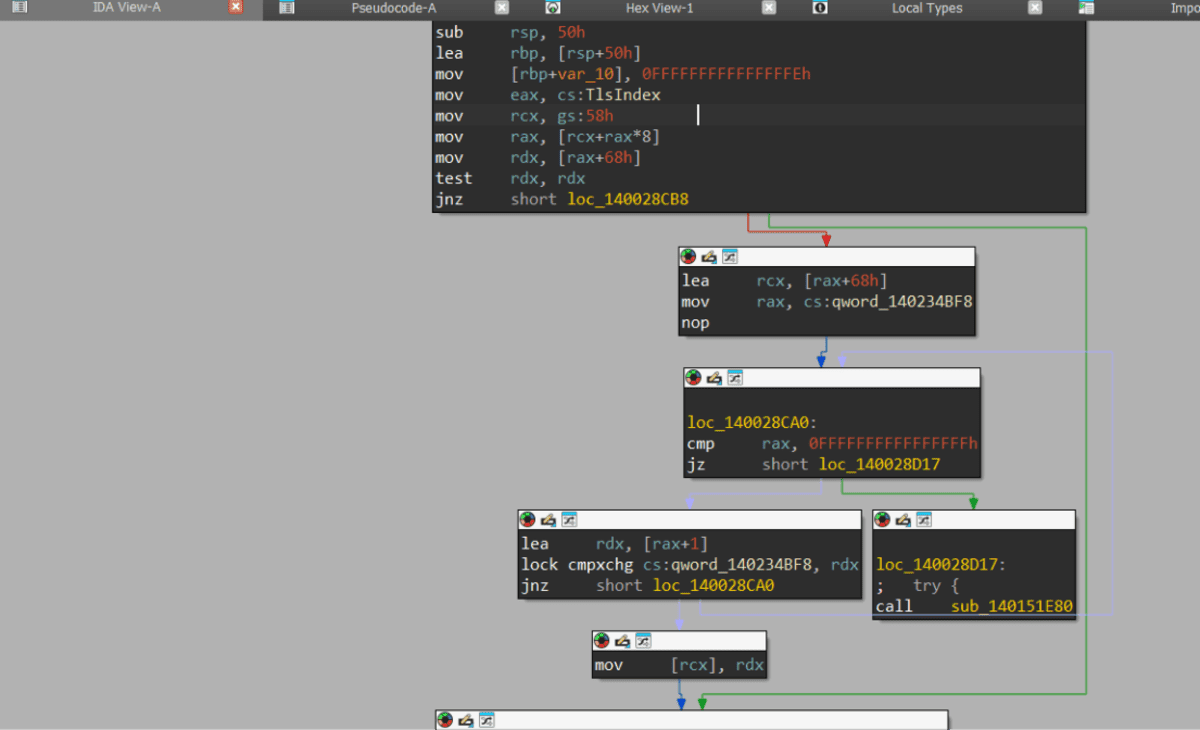
The startup sequence shared by all three programs in this family, shown here for one of the three.
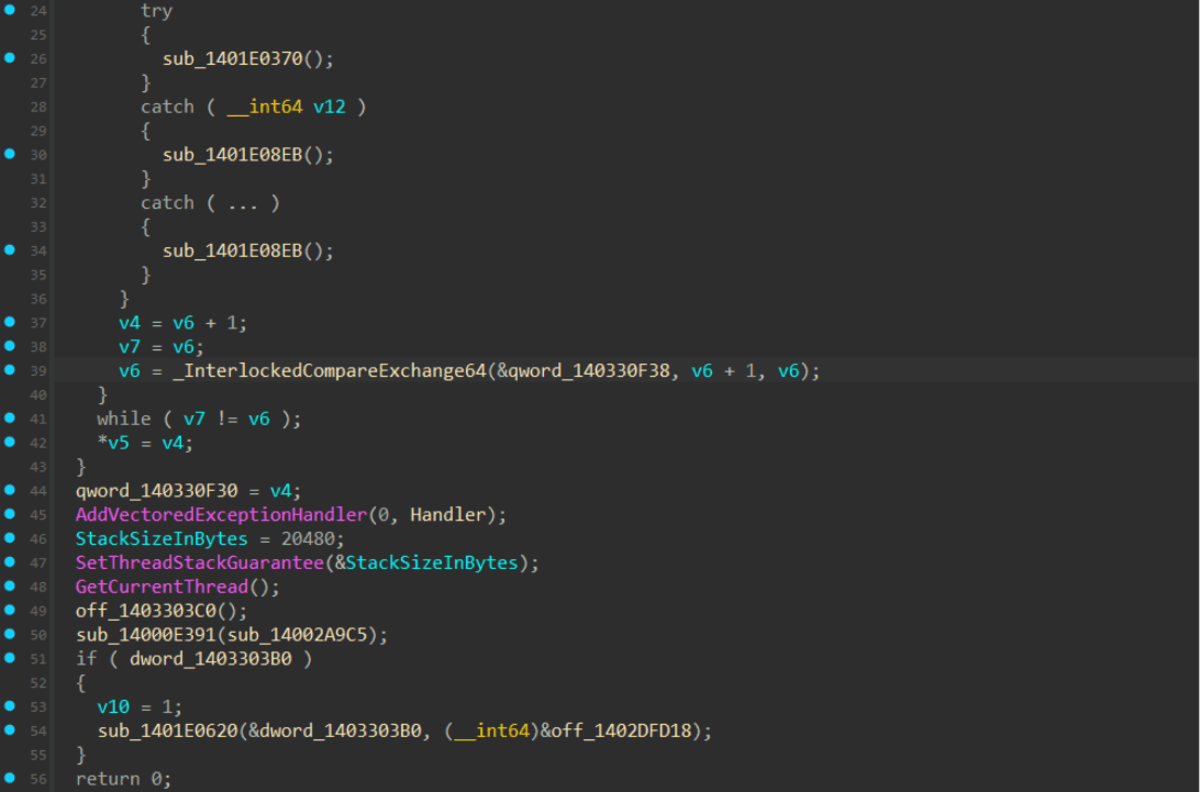
The identical startup sequence confirmed independently in a second program from the same family.
The link between the messaging platform request and the program’s own code was traced step by step. The web address is not a coincidental string sitting unused in the file. It is reached by a specific function that assembles the request from two separately decrypted pieces, a bot identifier and a channel identifier, each protected by its own small decryption routine that tries an environment variable first and falls back to a value built into the program.

The messaging platform’s web address, confirmed to be referenced by a specific function rather than sitting unused in the file.
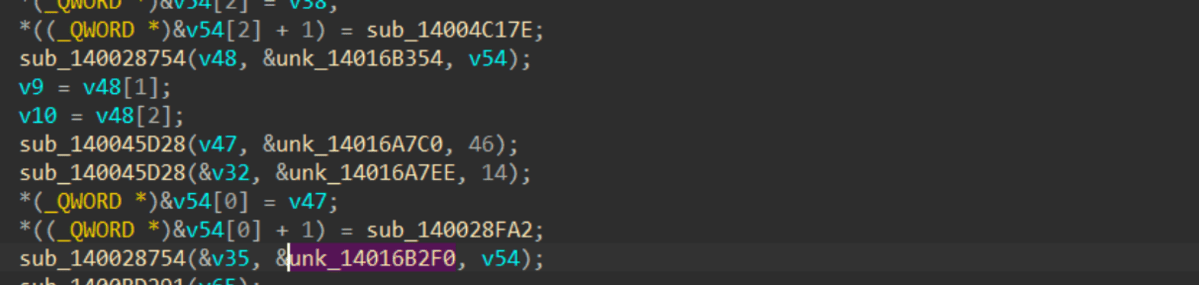
The function assembling the outgoing request from two separately decrypted values.
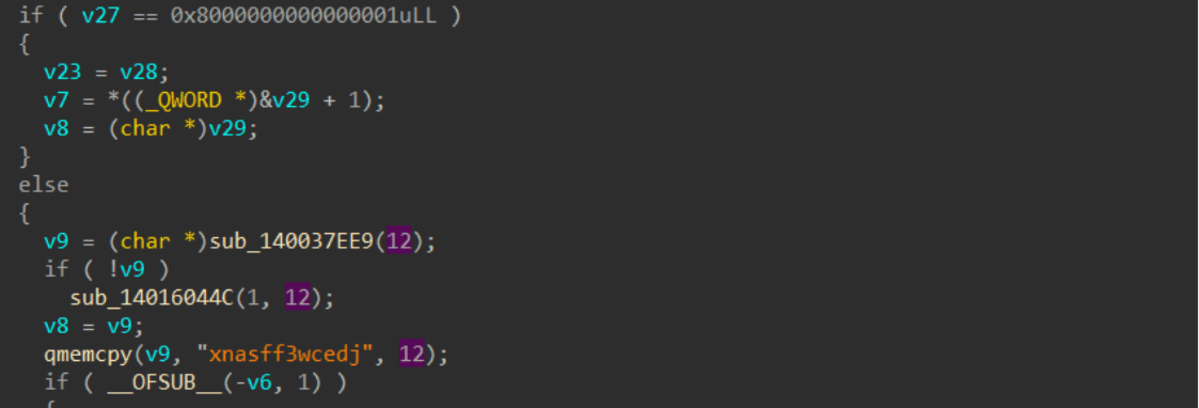
The fallback branch of the decryption routine, copying in a value built into the program when no environment variable is present.
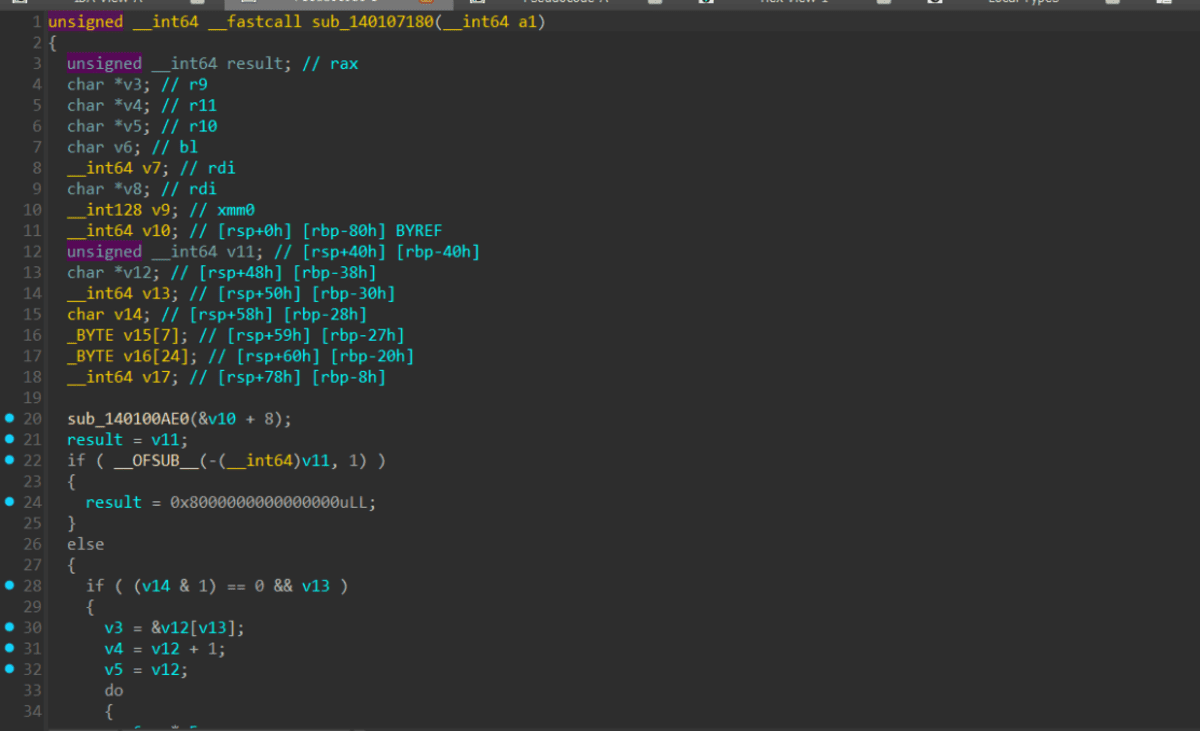
The start of the routine that checks for the environment variable referenced above.
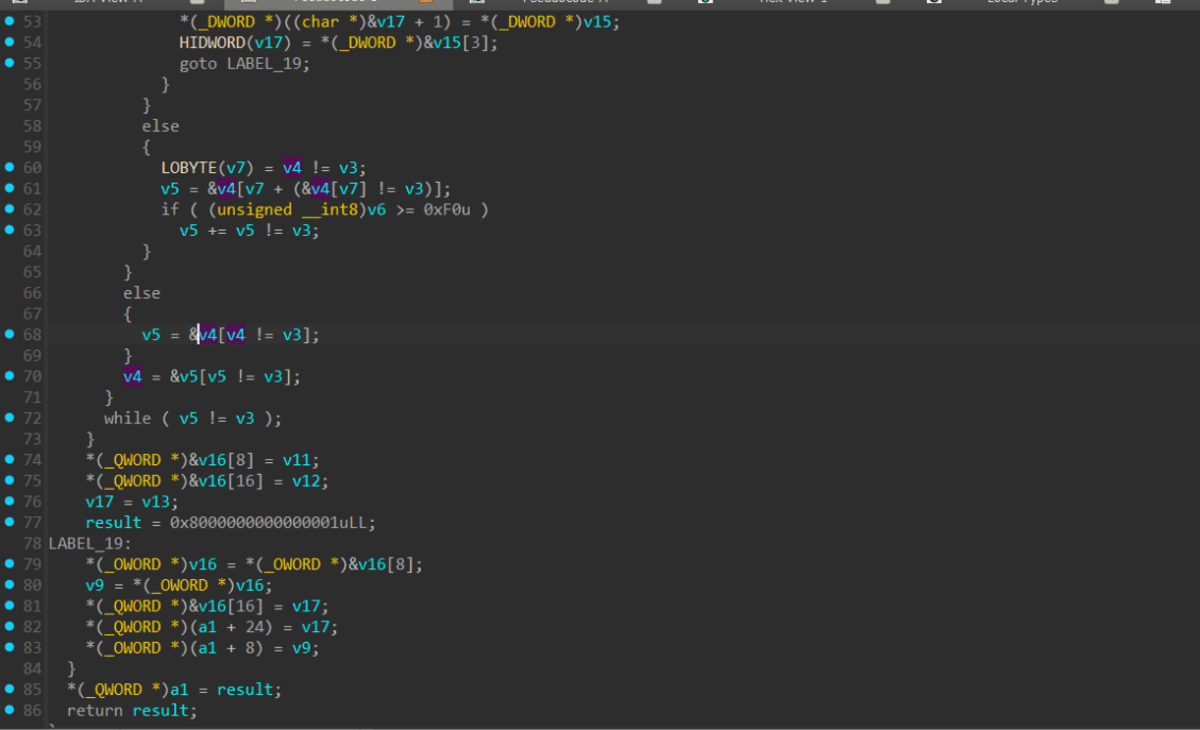
The same routine’s exit path when the environment variable is not present on the machine.
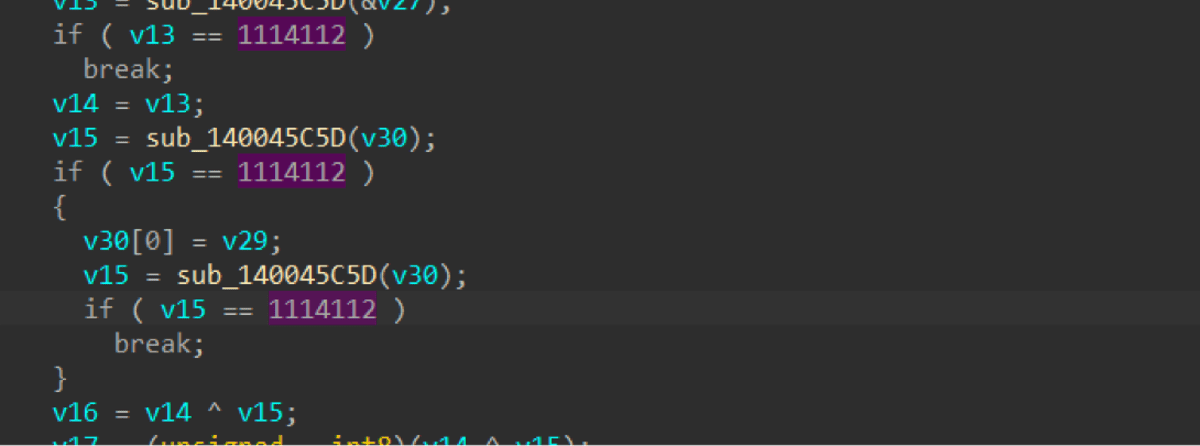
The final decryption step applied to the messaging platform credentials once both pieces are resolved.
One of the three programs in this family additionally protects its backup communication links with a second, more elaborate layer of custom encryption beyond what the other two use, which store the same category of links in plain, unencrypted text.
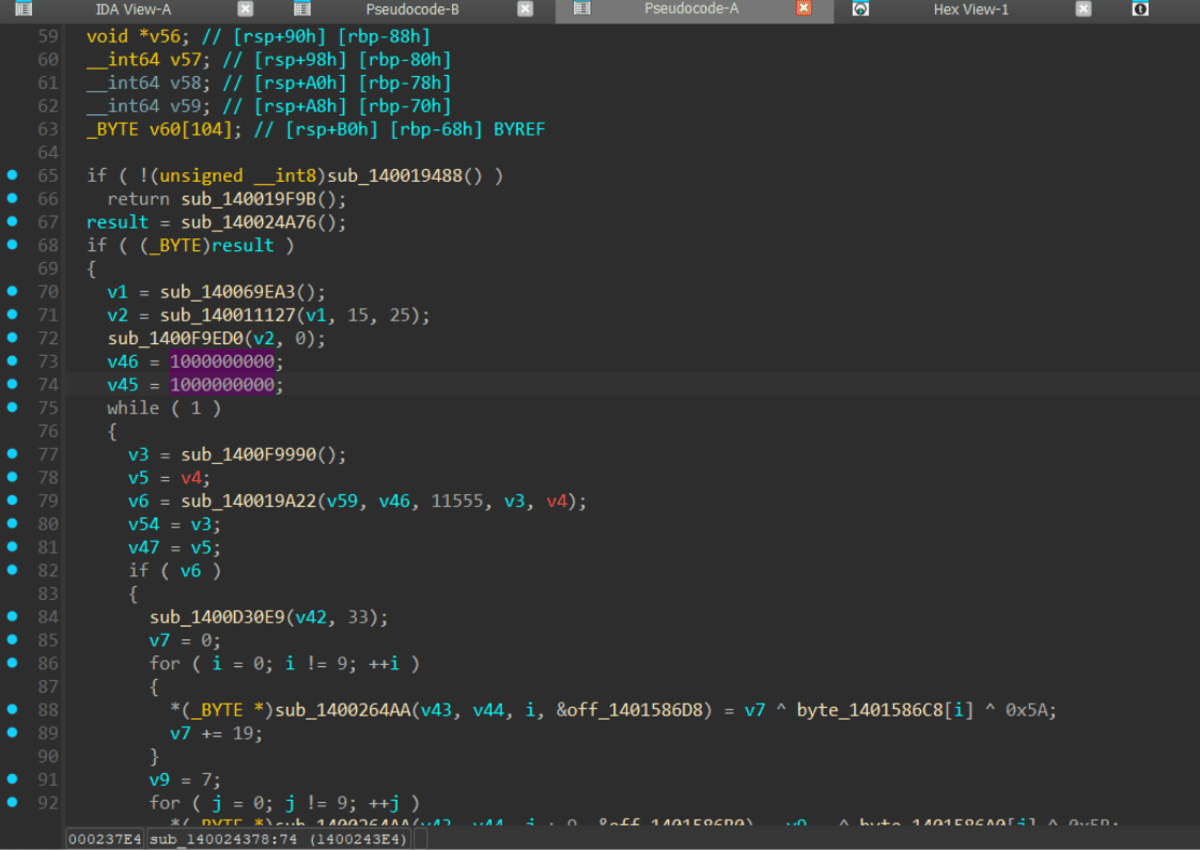
The additional encryption layer protecting this program’s own backup communication links, combining several distinct techniques across the encrypted data.
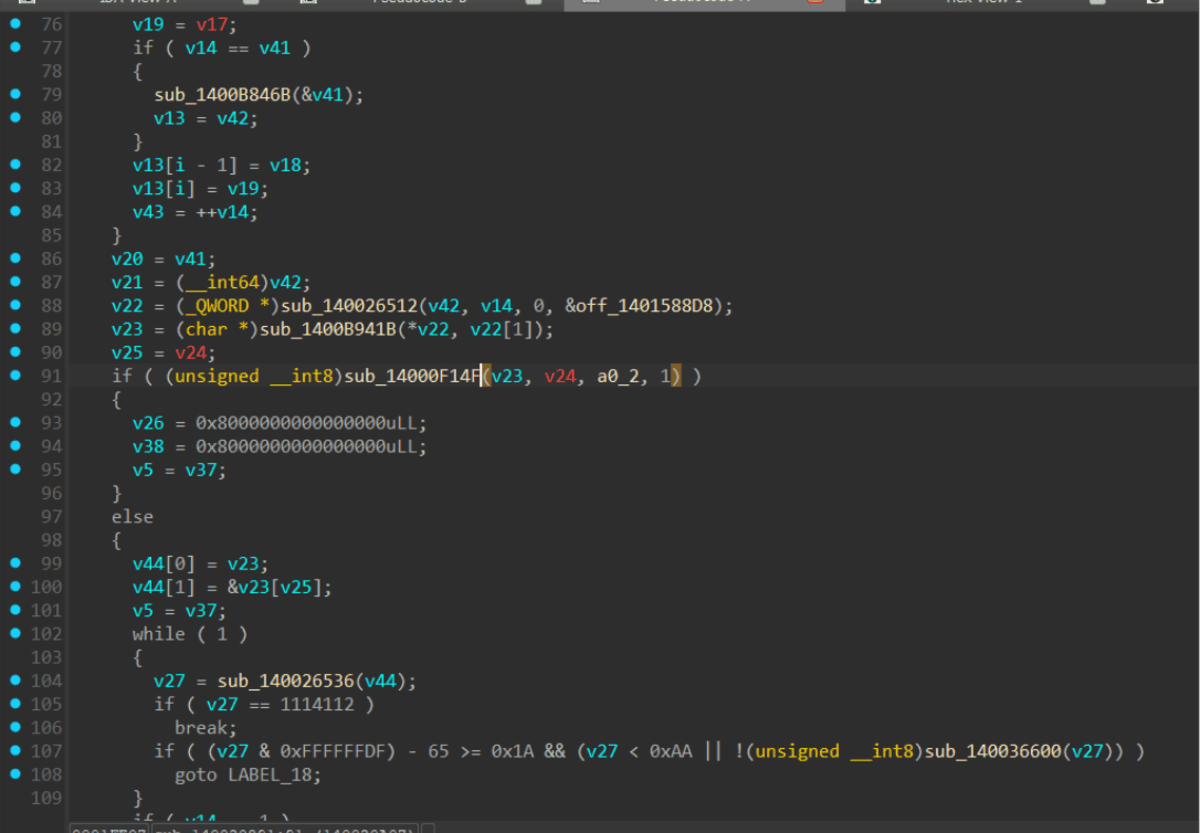
The logic that inspects fetched content for an empty placeholder value before treating it as a genuine instruction.
This same program computes a unique identifier for its own single instance lock using a proper cryptographic hashing method rather than a fixed value.
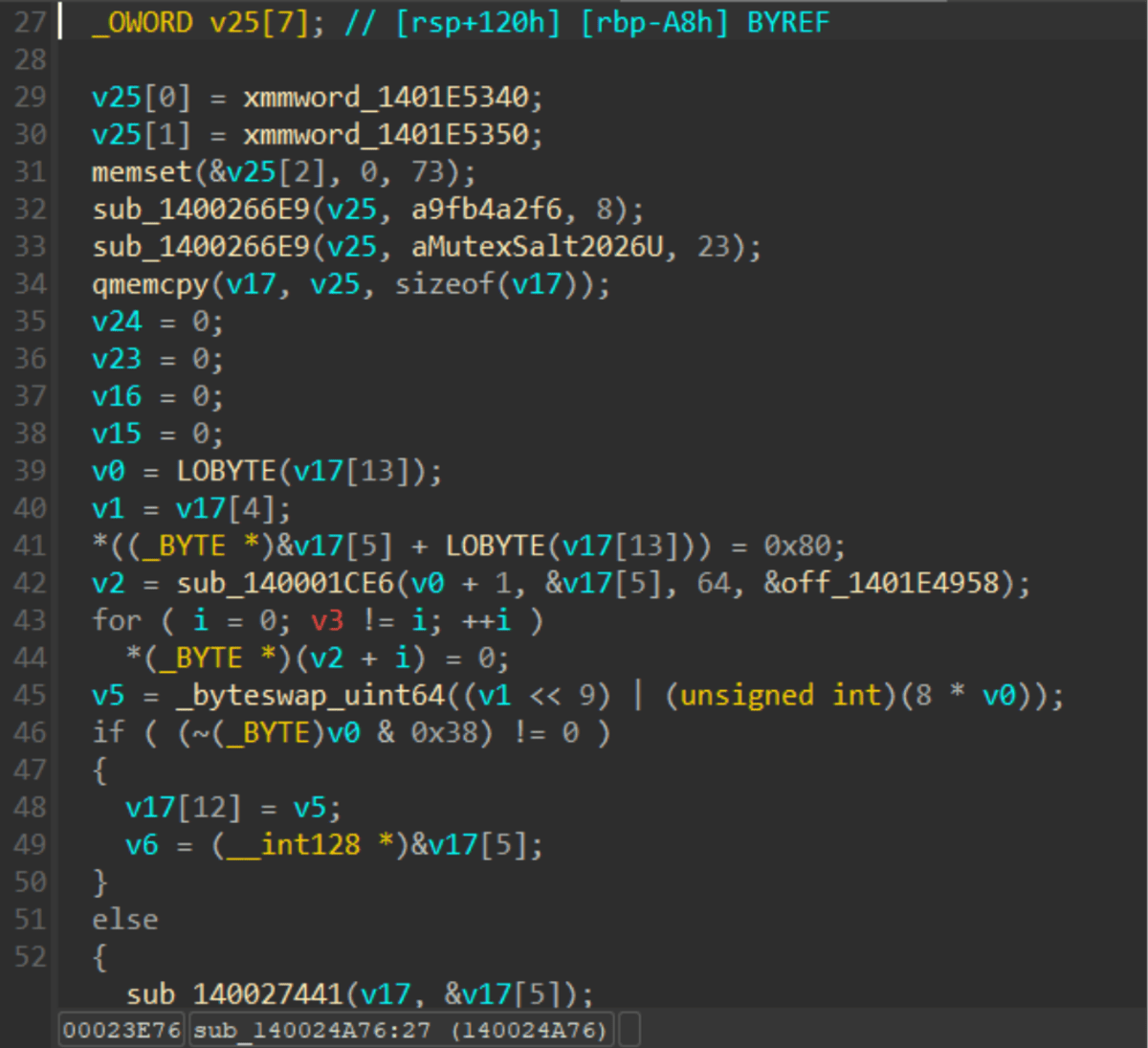
The routine computing this program’s unique single-instance lock identifier using a standard cryptographic hash.
It then installs itself onto the machine using several persistence techniques at once. It creates multiple scheduled tasks through Windows’ own built in task automation programming interface rather than by running a visible command, making the activity harder to notice with straightforward process monitoring, and it places shortcuts in the Windows startup folder for both the current user and for every user on the machine.
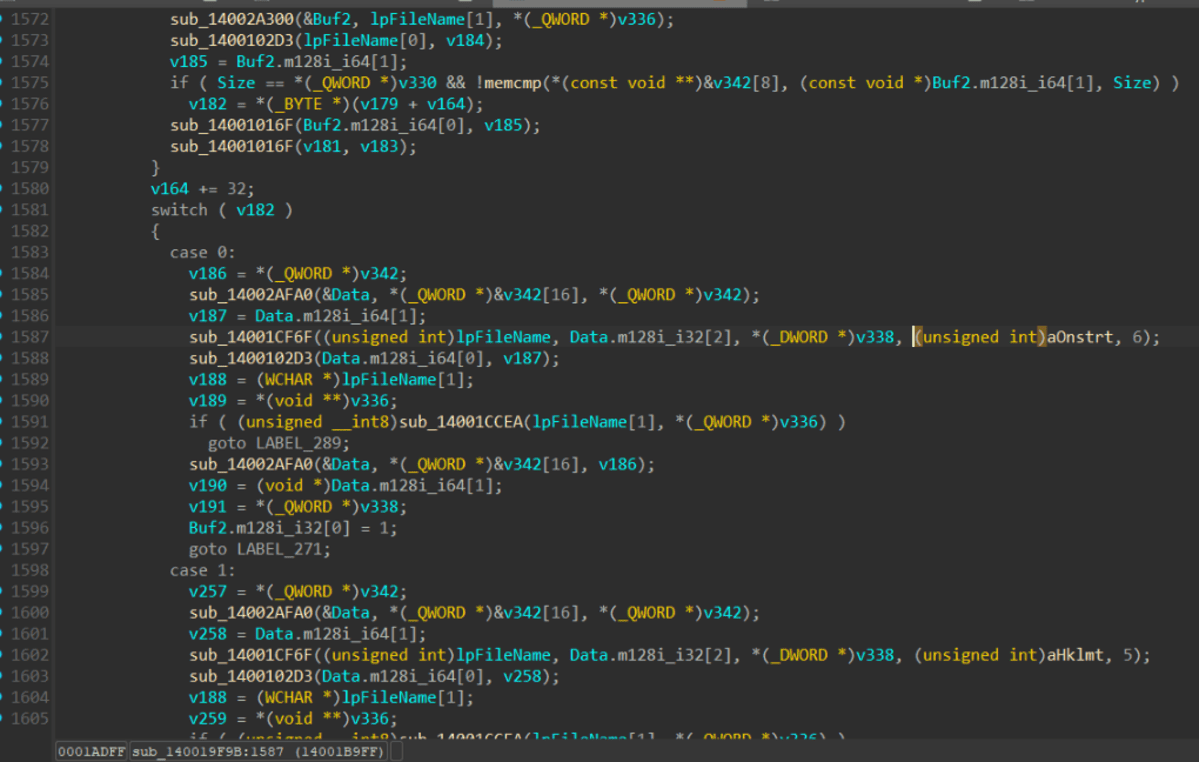
The persistence installer’s central decision point, choosing between nine separate installation techniques.
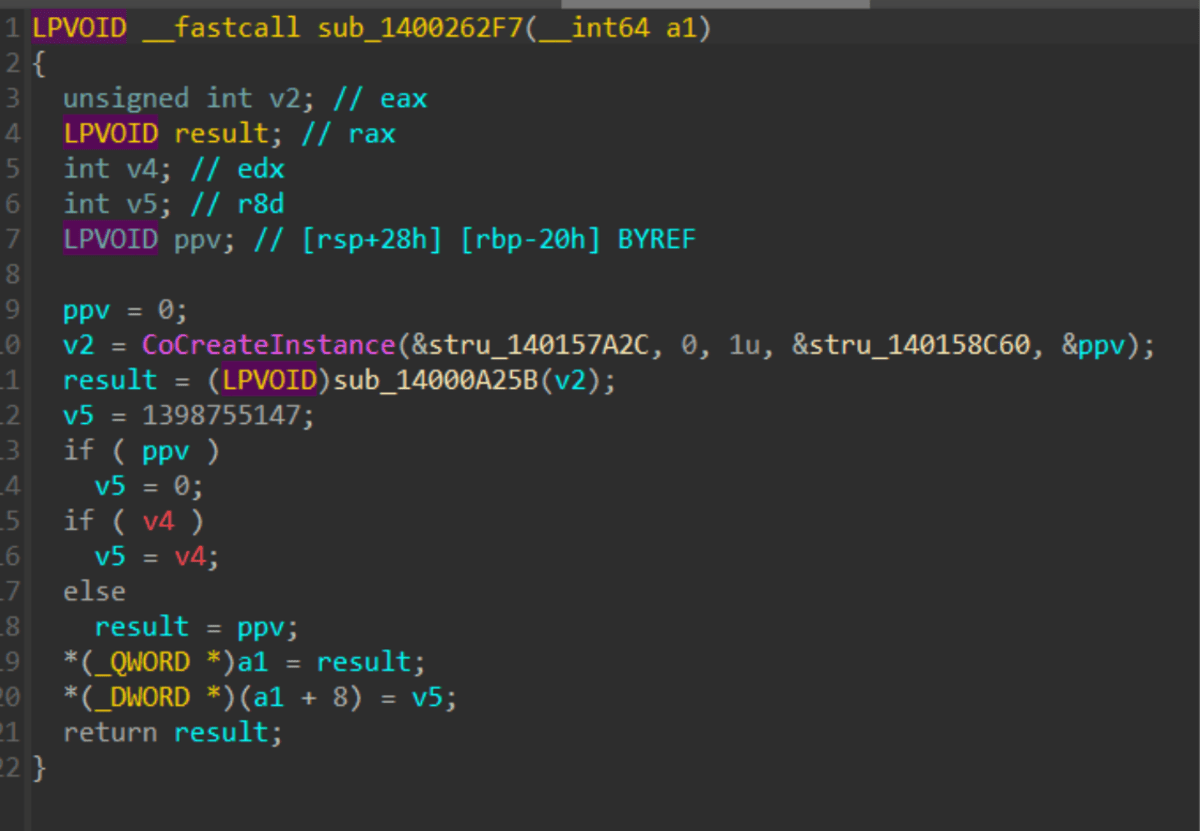
The program connecting directly to Windows’ native task automation service.
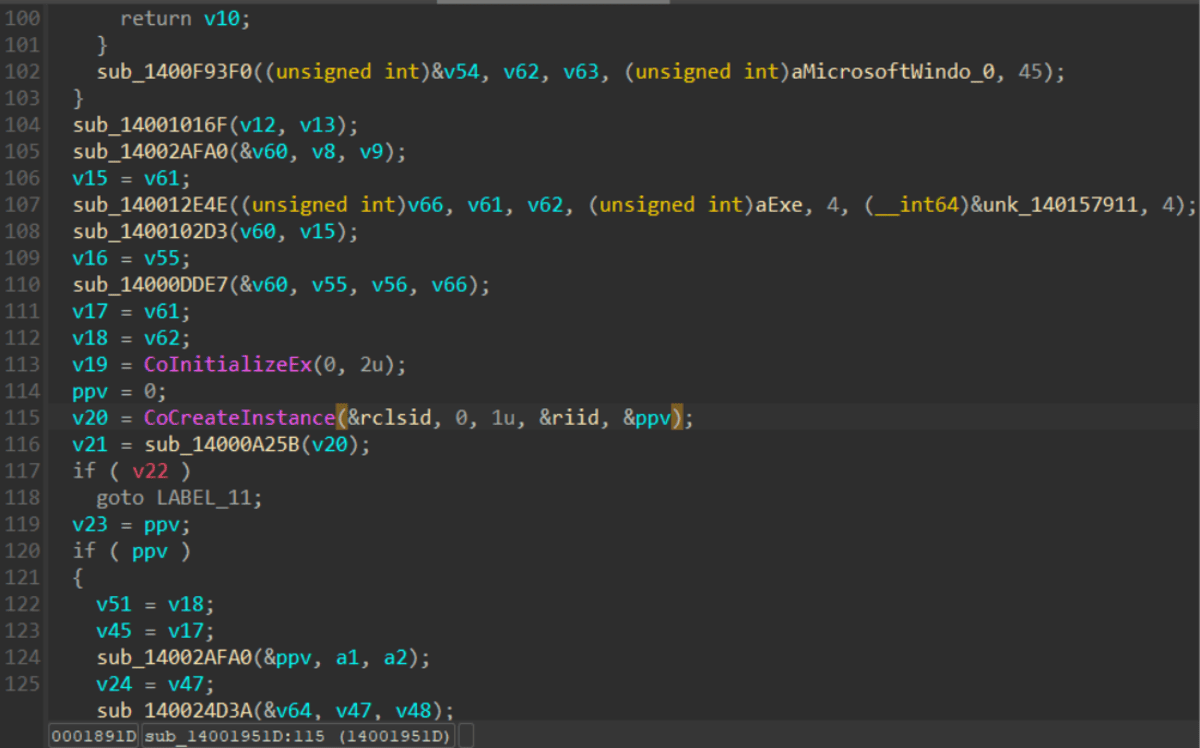
The program building a native Windows shortcut object in memory as part of the startup folder technique.
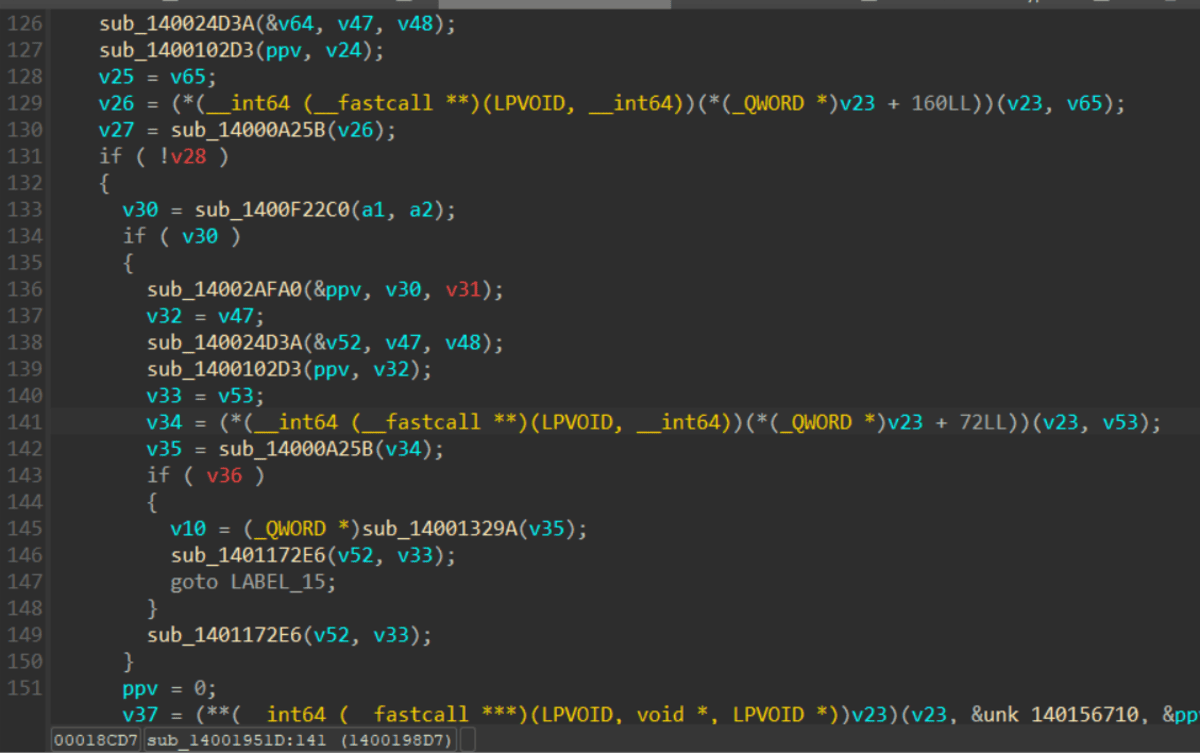
The shortcut object being configured to point at the program’s own executable file.
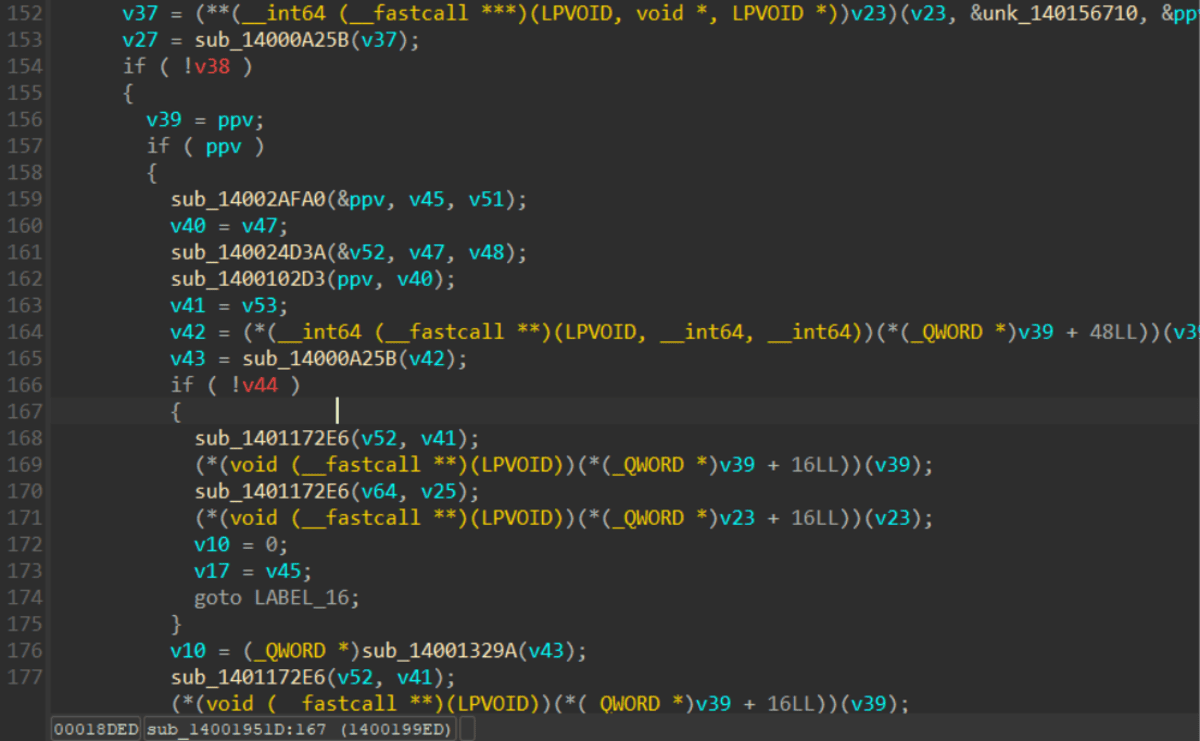
The completed shortcut object being saved to disk, placing it in the Windows startup folder.
Before installing any of this, it first copies itself to a new location under a randomly generated name, and points every persistence mechanism at that copy rather than at the file the victim originally ran.
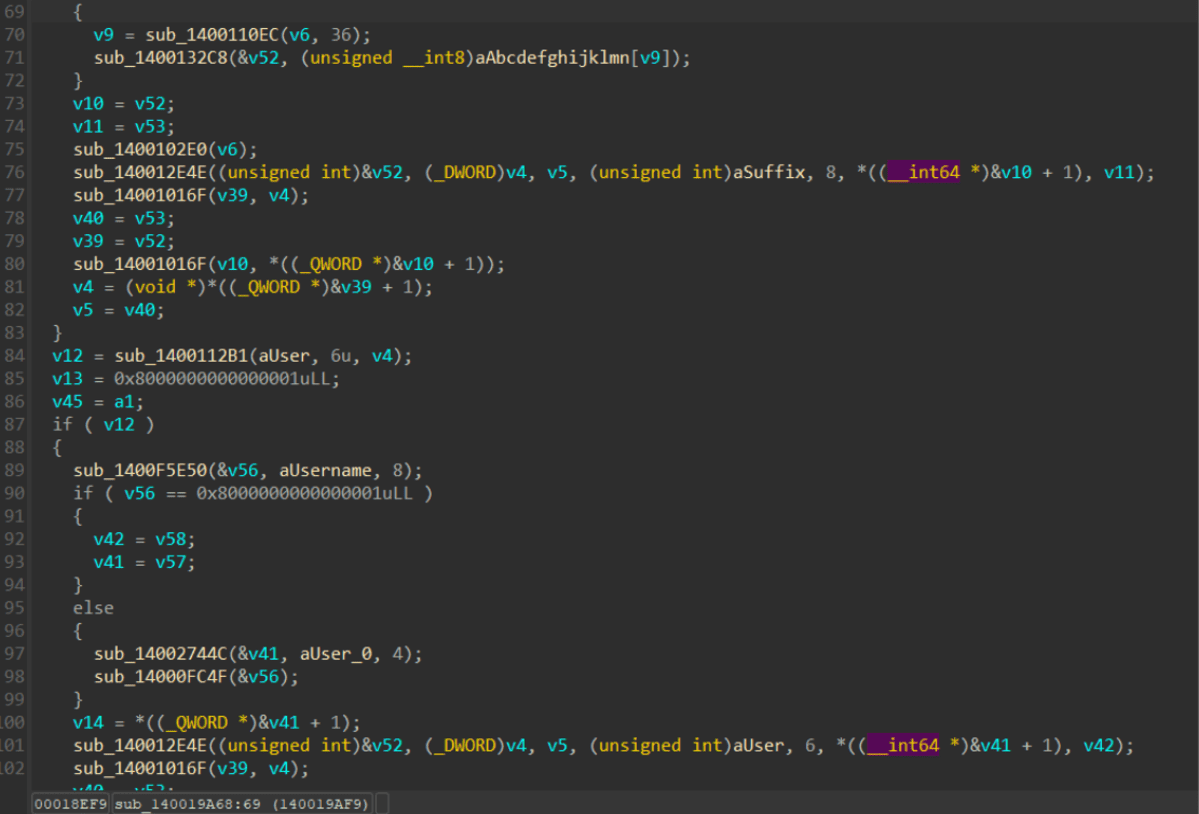
The routine generating the randomised name used for the program’s self-copy.
Two of the three programs in this family, though not the third, contain genuine, well formed Russian language debug and status text built directly into their code, for example messages describing automatic startup configuration and update checking. This is a first party signal drawn directly from the malware’s own compiled text rather than from any external infrastructure, and it draws a clear line between the two programs that share it and the one that does not, without on its own identifying any individual involved.
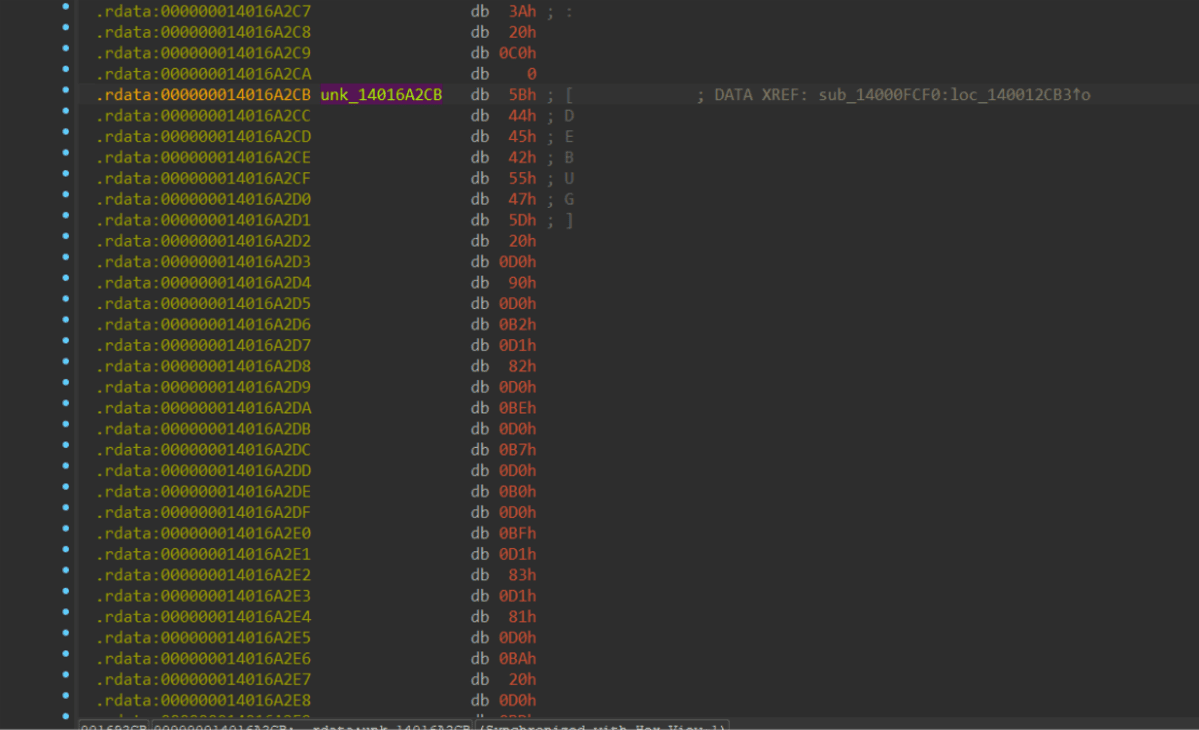
Genuine Russian-language debug text found embedded in two of the three programs in this family.
Representative examples of this text, read directly from the affected programs, are set out below alongside their English meaning.
“Автозапуск настроен успешно” (a status message logged by the program): “Autostart configured successfully”.
“Запуск основного цикла проверки обновлений” (a status message logged at startup): “Starting main update-check loop”.
An adjacent English-language line in the same log block, “Spreading logic handled by persistence module.”, confirms the Russian and English text sit in the same developer-authored logging output rather than in unrelated parts of the program.
Attribution Limitation
Russian-language developer strings are treated as a development-environment indicator only. They are not sufficient to establish actor nationality, geographic location, or threat-group affiliation.
Second-Stage Malware: Family Two
The second family consists of two considerably larger files, one of which carries file metadata impersonating a well known, legitimate security product. The great majority of each file, well over ninety five percent, is filler data included purely to inflate the file size and does nothing.

The true starting point of this program, initially hidden behind the large volume of filler data surrounding it.
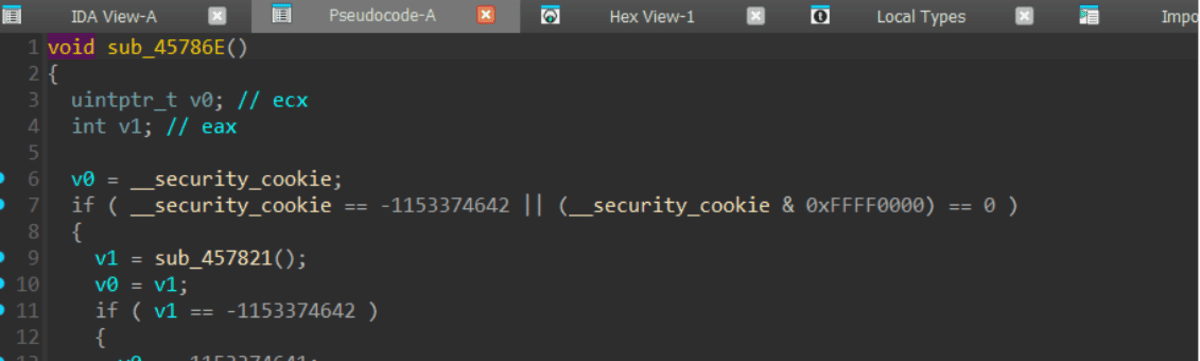
An ordinary startup safety check, confirming this stage is standard program initialisation rather than a custom decryption routine.
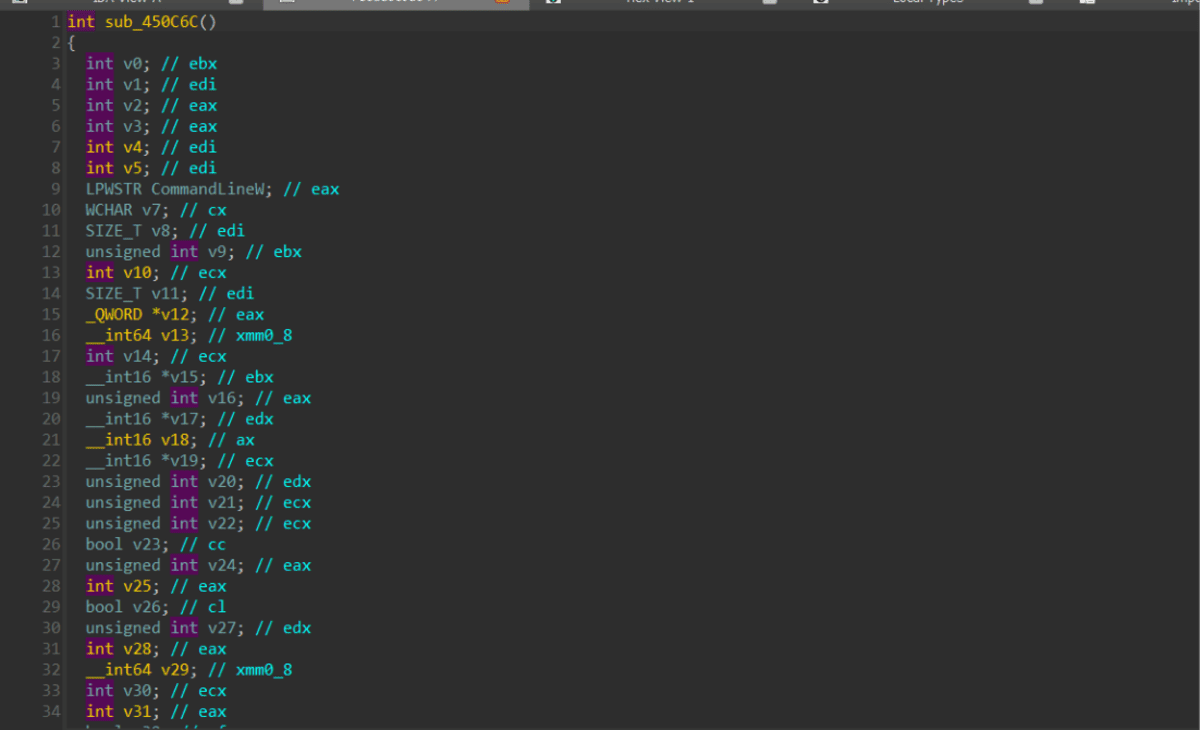
The program’s genuine main routine, identified by its handling of the command line the program was launched with.
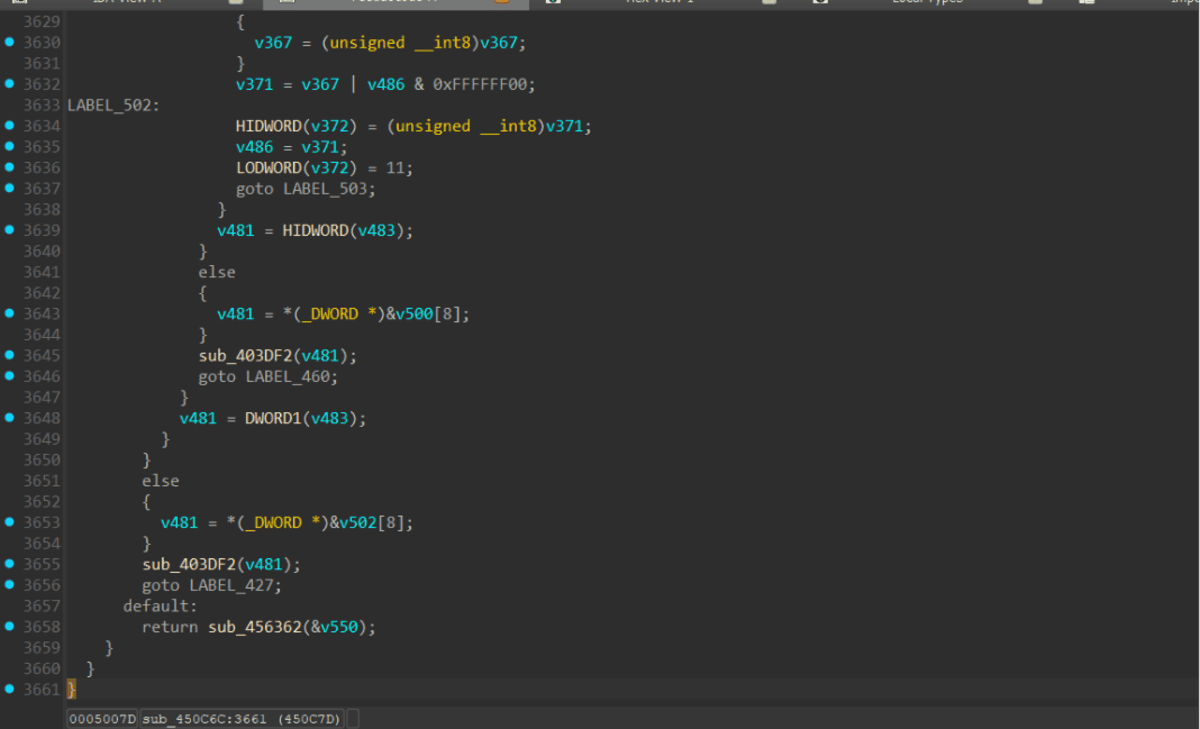
The closing lines of the same routine, showing a large internal decision structure consistent with genuine, non-trivial program logic.
Genuine code inside both files does read two bundled configuration documents, one presented as application settings and one as workspace settings, for ordinary internal fields such as version number and language, but neither file ever reads the specific fields that would point it at a live network address, so those particular fields, although present in the file, currently do nothing.
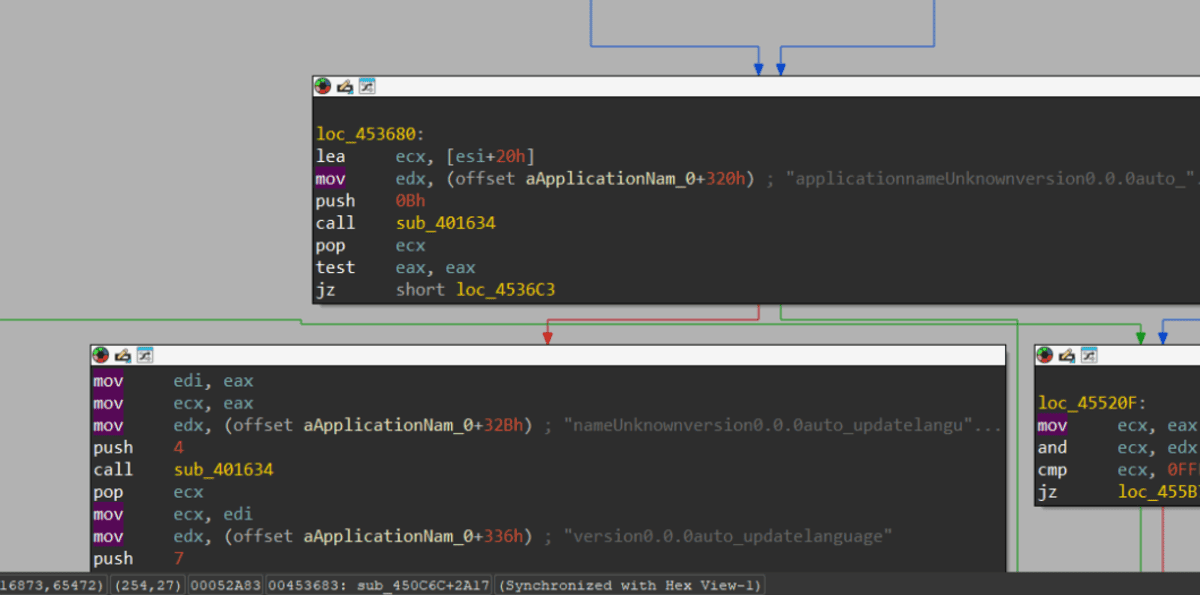
The program genuinely reading ordinary fields from its bundled configuration document, confirming the document is parsed rather than simply present as decoration.
Both files were also confirmed to have no networking capability of their own at all. A complete review of every function each one imports from Windows found nothing capable of making a network connection. One domain associated with this family elsewhere in this report was observed at the network level during the wider controlled detonation of the full infection chain, not traced to a direct call inside either file; the two findings describe different points in the same chain rather than a contradiction, and the exact mechanism bridging them sits outside what these two files alone contain.
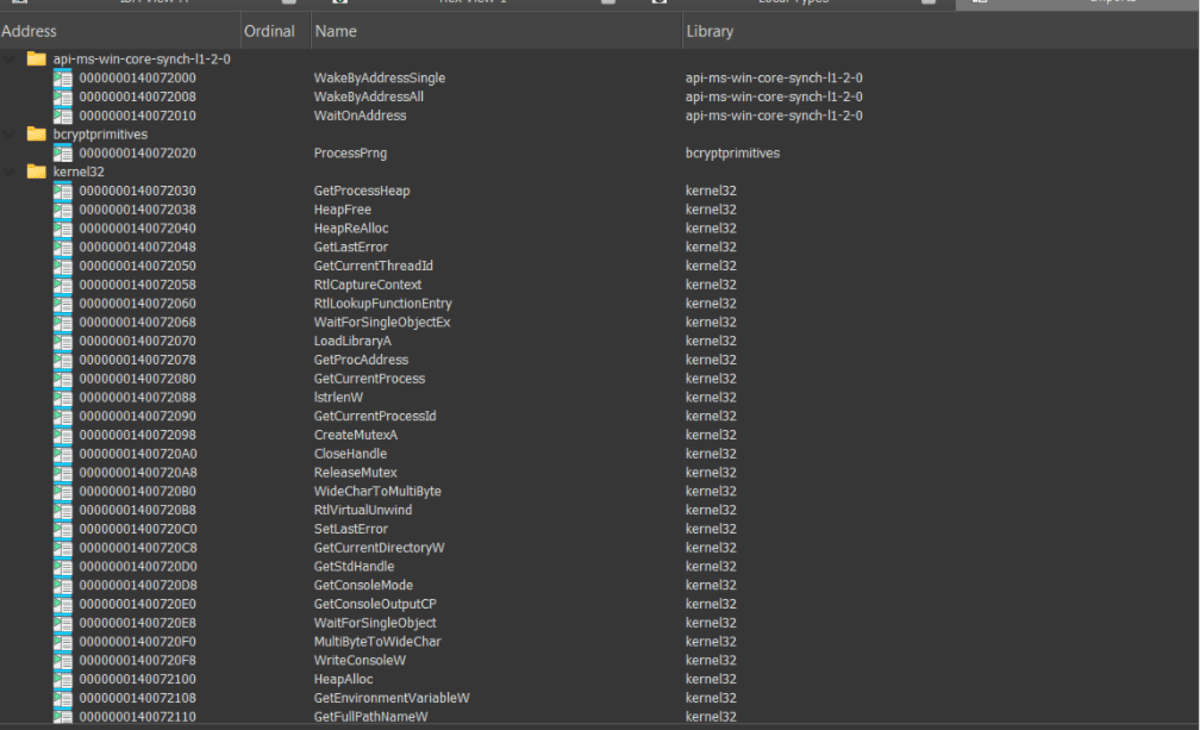
The first part of one program’s complete list of Windows functions it can call, none of which are capable of network activity.
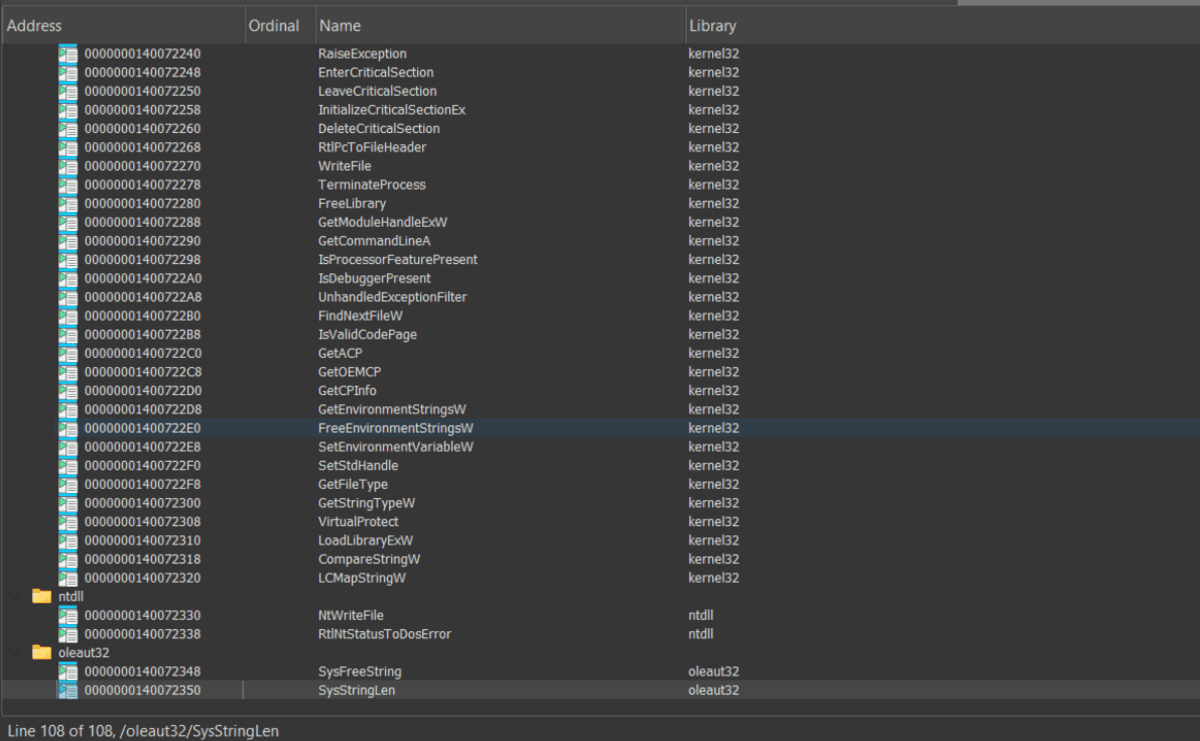
The remainder of the same list, confirming no networking function appears anywhere in it.
Confirmed Behaviour From a Controlled Detonation
A controlled detonation of the full delivery chain confirmed every mechanism described above in practice. The downloaded programs installed eight separate ways of starting automatically after a restart: two registry run entries and five scheduled tasks disguised under names resembling well known Adobe, Google and “Gemini” branded software, plus one shortcut placed in the Windows startup folder. Six firewall rules were opened on the same three ports referenced above, after which a network tunnelling utility and a general purpose network relay tool both ran.
Matching each dropped file’s identity against the persistence points it created showed that a single downloaded program was responsible for four of the eight autostart mechanisms, dropped and renamed four separate times under different cover identities. Two further programs were dropped under a variety of names resembling well known, commonly trusted security and infrastructure tools, a deliberate attempt to blend in with allow list rules that commonly exempt trusted vendor software from scrutiny. The full process relationships recorded during this detonation are shown below.
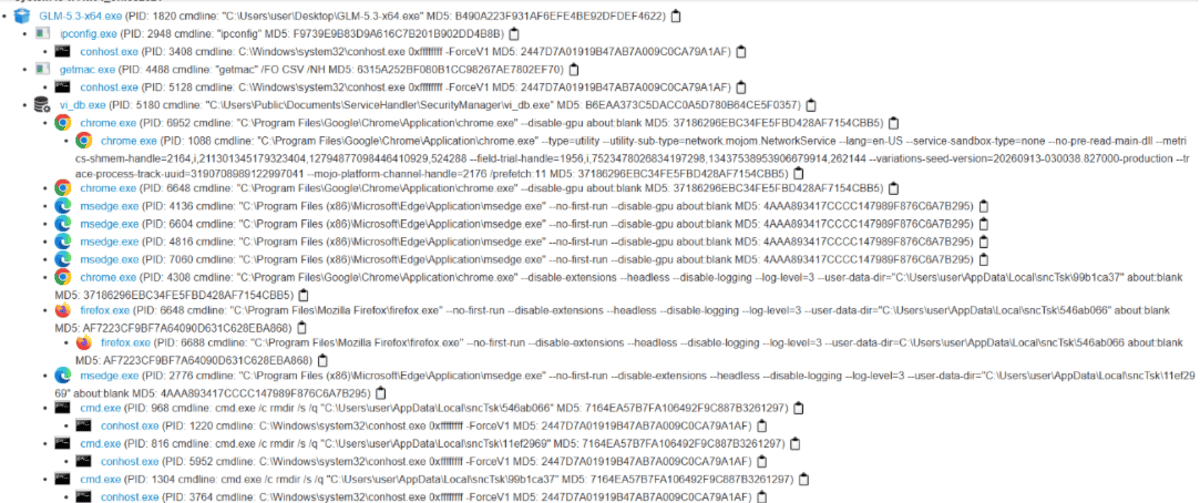
The installer launching a downloaded program that goes on to open multiple web browsers with disposable profiles, later deleted.
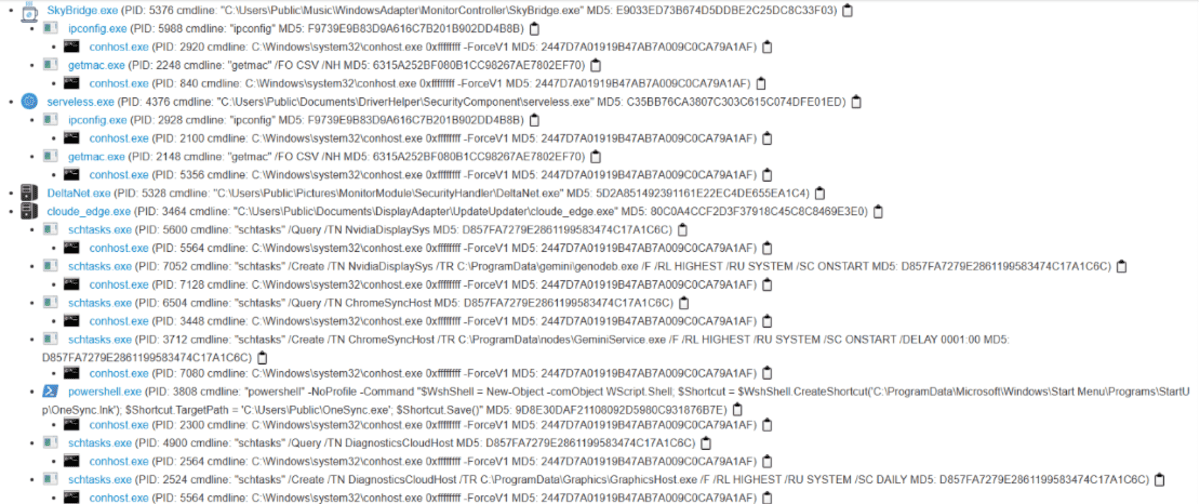
A second downloaded program issuing its scheduled task and startup folder persistence commands.
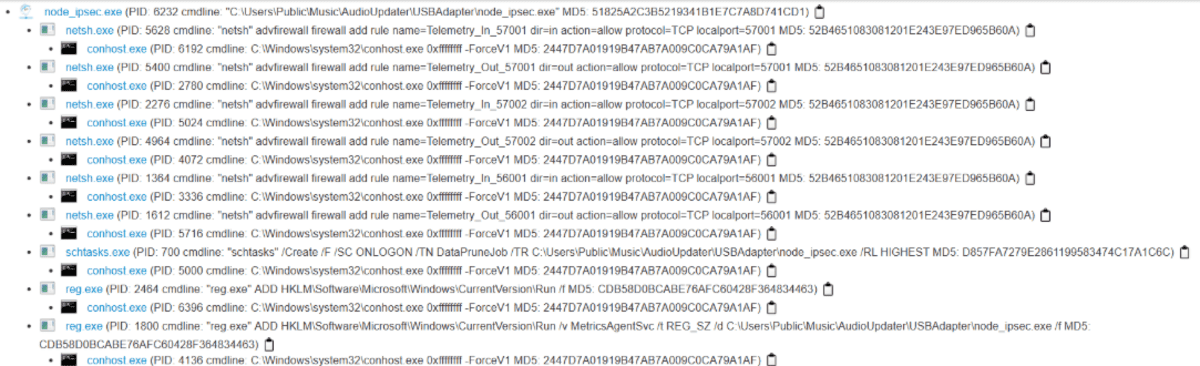
A third downloaded program opening the firewall rules and creating a further scheduled task and registry entry.
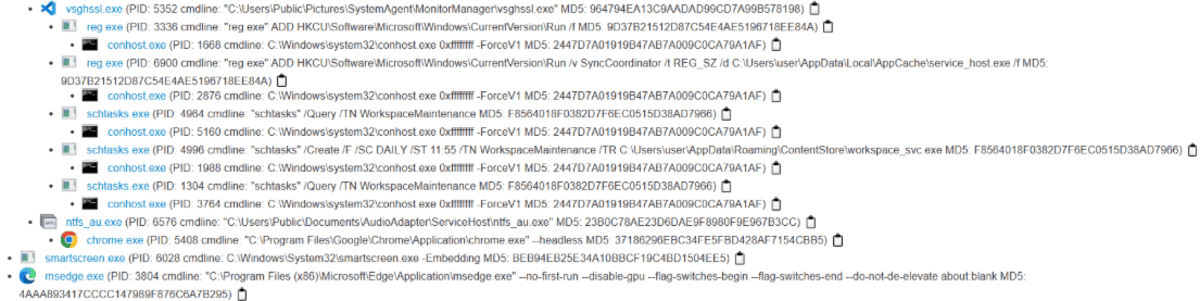
The remaining two downloaded programs creating their own registry and scheduled task persistence, and one spawning a bare, headless web browser instance.
One of the downloaded programs opened four different web browsers in the same run, each given its own disposable, isolated profile, and deleted every one of those profile folders immediately afterward. This harvest then clean pattern is consistent with automated credential or browsing session theft across multiple browsers in a single pass.
Wider Operator Infrastructure
The same controlled detonation confirmed the campaign communicates with a broader set of domains beyond those recovered from the installer’s own configuration, following a consistent hosting pattern across the set. Separately, the associated cloud-development project, the same platform used to host and distribute the second stage packages described above, shows close to a year of continuous, single publisher activity.
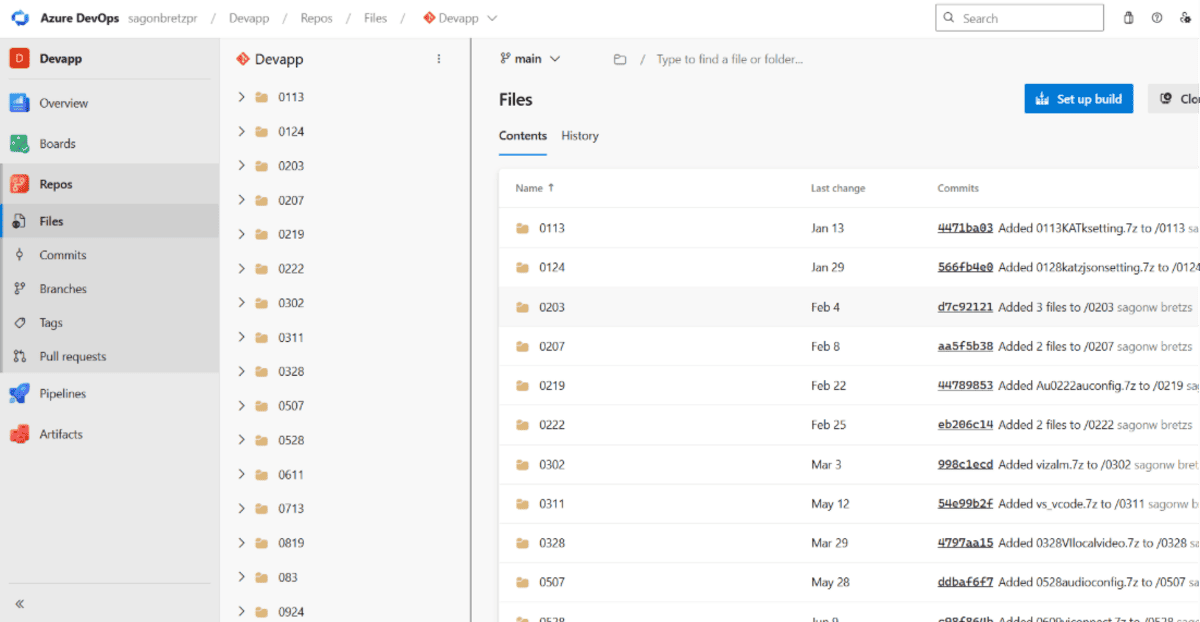
The earlier portion of the operator’s cloud project, showing months of dated folders, each one an uploaded package, all attributed to the same publisher.
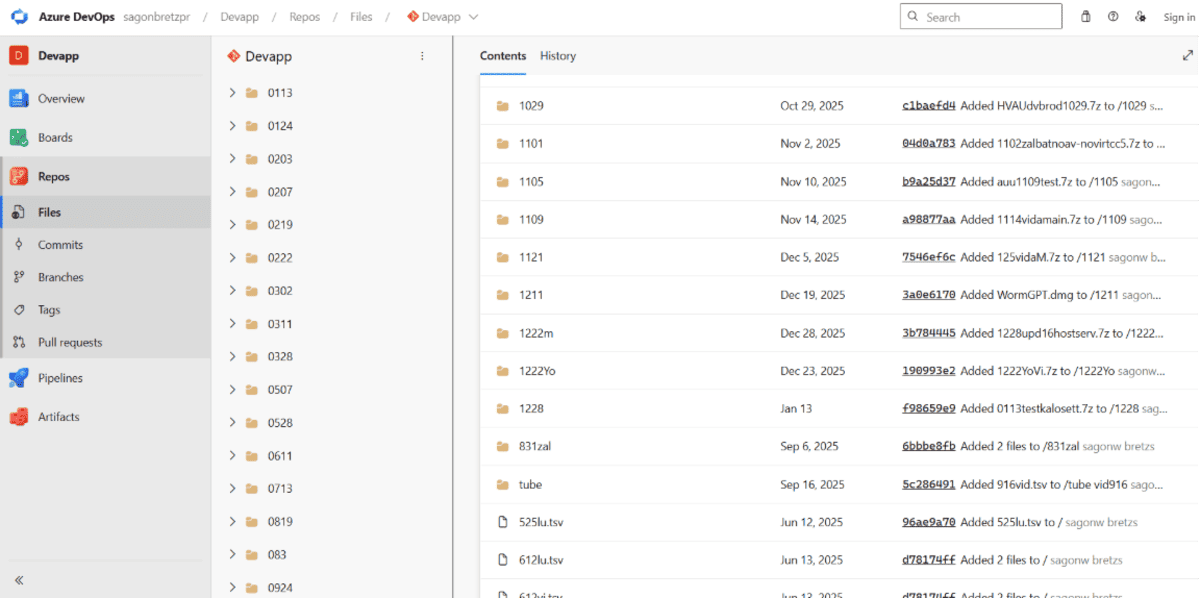
The later portion of the same project, extending the operator’s activity to close to a full year and including a copy of a separately known, publicly documented malicious AI chat tool.
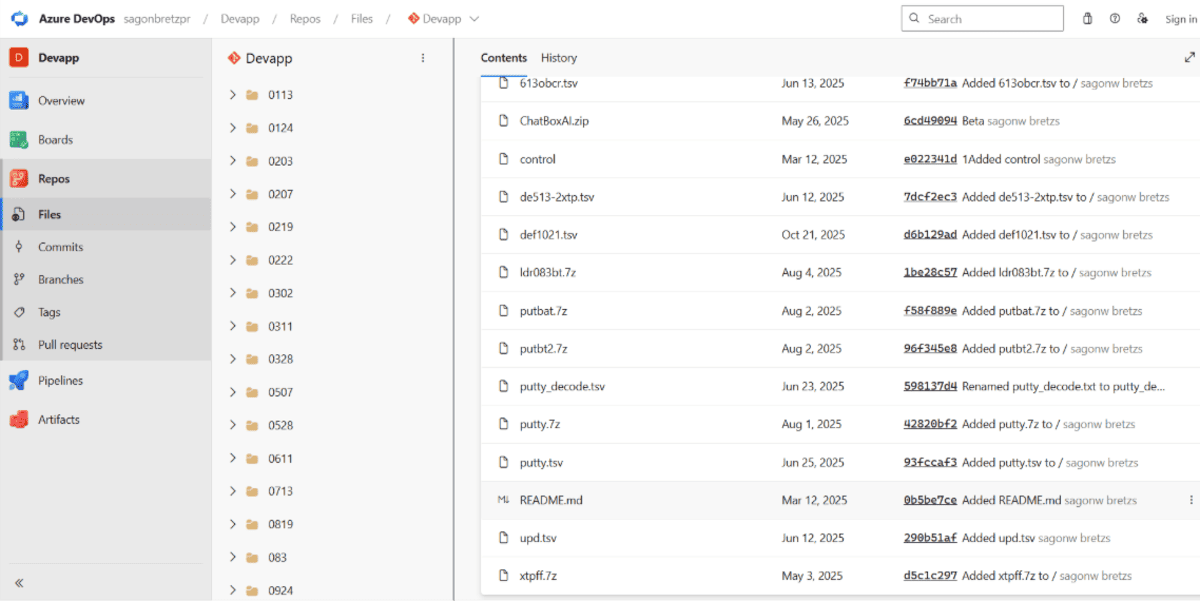
Additional files sitting outside the dated folder structure, including a cluster of trojanized copies of a legitimate, widely used remote access utility.
Alongside this campaign’s own packages, the same project hosts a copy of a separately known and publicly documented malicious AI chat tool, along with a cluster of trojanized copies of a legitimate, widely used remote access utility, indicating the operator runs a broader, reusable delivery operation rather than a single, one off campaign.
Publisher Information
The repository distributing the fake installer has a single publisher account, and its entire history consists of four changes, all made on the same day and all marked as verified by the hosting platform. The account and its repository had drawn a modest amount of public engagement at the time of this review.
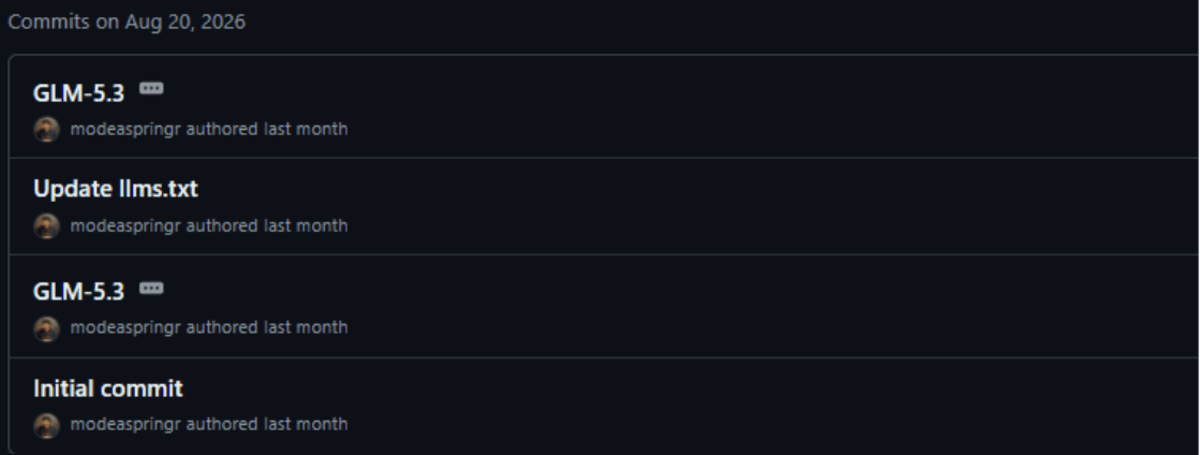
The complete change history for the repository distributing the installer, all four entries made on the same day by the same account.
The account handle behind this repository is recorded in this report as a lead identifying who published the distribution page, not as a confirmed identity for whoever wrote the malware itself.
MITRE ATT&CK Mapping
| Tactic | ID | Technique Name | Description |
|---|---|---|---|
| Initial Access | T1195 | Supply Chain Compromise | Fake AI tool installer distributed through a convincing public repository page |
| Execution | T1204.002 | User Execution: Malicious File | Requires the victim to manually download and run the installer |
| Defense Evasion | T1497 | Virtualization/Sandbox Evasion | Fifty two signal scored detection system blocks execution in analysis environments |
| Defense Evasion | T1562.001 | Impair Defenses: Disable or Modify Tools | Ten Microsoft Defender protections disabled via a hidden background process |
| Defense Evasion | T1562.004 | Impair Defenses: Disable or Modify System Firewall | Three inbound firewall rules opened |
| Defense Evasion | T1027 | Obfuscated Files or Information | All operational secrets stored in a custom encrypted format |
| Defense Evasion | T1036.005 | Masquerading: Match Legitimate Name or Location | Dropped files renamed to resemble trusted security and infrastructure software |
| Command and Control | T1102.001 | Web Service: Dead Drop Resolver | Instructions and backup links resolved from public paste sharing sites |
| Command and Control | T1090 | Proxy | Tunnelling and relay tools executed after firewall ports opened |
| Exfiltration | T1041 | Exfiltration Over C2 Channel | Victim summary sent over the same channel used for command and control |
| Persistence | T1053.005 | Scheduled Task | Multiple scheduled tasks created through native Windows automation interfaces |
| Persistence | T1547.001 | Registry Run Keys / Startup Folder | Registry run entries and startup folder shortcuts created |
| Collection | T1555.003 | Credentials from Web Browsers | Disposable browser profiles used and deleted to harvest credentials and sessions |
Indicators of Compromise (IOCs)
| S. No | Indicators of Compromise (IOCs) | Type | Remarks |
|---|---|---|---|
| 1 | 0f6c506f7616965500 f242819fb13aee6459fad1e0862 4b871219b2859b0a493 | SHA-256 | Installer (loader) |
| 2 | 28138e6ab9e5c49f83 4456ac112ec39e16b5bad11a51 6007309bf9015dcd0fa2 | SHA-256 | Second-stage program (Family One) |
| 3 | fb851a56210c4e62 2be83730a65433a3d9d86a7f3393 d2d47ad80ec84666f458 | SHA-256 | Second-stage program (Family One) |
| 4 | bc381c2bac4899d7 145e429e8316aa04c4241663a885cd d7d817ea30f5734757 | SHA-256 | Second-stage program (Family One) |
| 5 | d2c5366b14d49eb2 62250ae1e7656d121b42ff1b32b c59d2bb82ffc0698095ce | SHA-256 | Second-stage program (Family Two, security-product impersonation) |
| 6 | baf547e94b80a32ba 6cc82f22b41cb4c488dbbee1e15 1c014e0610fdc1847056 | SHA-256 | Second-stage program (Family Two) |
| 7 | github.com/GLM- 5-3-app/GLM-5.3 | Web address | Distribution page for the malicious installer |
| 8 | sagonbretzpr | Hosting account | Public cloud development project hosting second-stage packages |
| 9 | hkdk.events/99cao586ez749z | Web address | Reporting endpoint, confirmed active |
| 10 | pastebin.com/raw/8PwZ7iGr | Web address | Instruction manifest link, confirmed active |
| 11 | pastebin.com/raw/Wrac6rfr | Web address | Access token link, confirmed active |
| 12 | cloudprotectsoftware.cfd | Domain | Second-stage network destination |
| 13 | memaiagent.cfd | Domain | Second-stage network destination |
| 14 | bs.146slot.org / lb.146slot.org | Domain | Second-stage network destinations, same hosting pattern |
| 15 | inuvrupi.cfd | Domain | Second-stage network destination, same hosting pattern |
| 16 | transcloud.cc | Domain | Second-stage network destination, independently flagged malicious |
| 17 | serverconect.cc | Domain | Second-stage network destination, independently flagged malicious |
| 18 | 147.45.197.92:443 | IP address | Second-stage command-and-control server |
| 19 | 94.228.161.88:443 | IP address | Second-stage command-and-control server |
| 20 | 194.28.225.230:443 | IP address | Second-stage command-and-control server |
| 21 | 6a5d235ee78c6aed e6a61448b4e9ff1e | TLS client fingerprint (JA3) | Fingerprint of the paste-site dead-drop connection |
| 22 | component-mgr-sync.lock | Filename | Single-instance lock artefact |
| 23 | #Soft0627 | Campaign tag | Present at the start of every outgoing report |
| 24 | a4f5c6bf2e6b179da7725 c7a3c8a5cebfcb6286e1dd4b23 ea98b32d5d8e15094 | Computed identifier | Unique background process lock value, constant across every infection from this build |
| 25 | .sysconfig_9fb4a2f6 (under %LOCALAPPDATA%) | Marker path | Persistence-already-installed marker |
| 26 | NvidiaDisplaySys / ChromeSyncHost / DiagnosticsCloudHost | Scheduled task names | All three resolve to copies of the same second-stage program |
| 27 | MetricsAgentSvc / SyncCoordinator | Registry run values | Created by second-stage programs during the controlled detonation |
| 28 | t.me/goof0r | Telegram channel | Messaging-platform channel associated with this campaign’s notification mechanism |
Recommendations
- Restrict acquisition of AI and coding tools to an approved software list, and block installer downloads originating from unmanaged file sharing or paste sites.
- Enable Microsoft Defender Tamper Protection across the organisation. This single control blocks the entire security neutralisation stage described in this report.
- Alert on a request to a public paste sharing site followed within seconds by a download from a cloud development platform originating from the same process, a distinctive network pattern for this campaign.
- Treat Defender exclusions covering entire system folders such as Users, Windows or ProgramData as suspicious and subject to immediate review.
- Block or monitor the network and file indicators listed in this report at the perimeter and on endpoint protection platforms.
- Treat any host with a cryptocurrency wallet application installed as a priority for containment and credential rotation if compromise is suspected.
- Audit hosts for scheduled tasks or startup entries under Adobe, Google or “Gemini” branded names that do not correspond to genuine, licensed software, and for any active network tunnelling or relay tooling.
- Rotate credentials and review browser session history on any host where disposable browser profiles or unexpected browser processes are identified.
Conclusion
Operation Phalanx Shield is a financially motivated Windows malware campaign that uses a convincing fake AI software lure, a 52-signal anti-analysis system and a human-activity check to reduce execution in automated analysis environments. Once execution conditions are satisfied, the loader disables key Microsoft Defender protections, modifies the Windows Firewall, decrypts its runtime configuration and retrieves additional payloads through a delivery chain that heavily abuses legitimate third-party services.
The investigation identified five second-stage programs across two related families, including components that establish multiple persistence mechanisms, open network tunnels and perform cross-browser data collection. The loader also conditionally retrieves an additional payload when Ledger Live is present, providing evidence of deliberate cryptocurrency targeting.
Infrastructure analysis shows sustained activity associated with the same publisher account across a broader set of malicious and trojanized software. Russian-language developer artifacts provide a potential development-lineage indicator, but available evidence does not establish the operators’ identity, location or affiliation with a specific threat group.
Appendix: Detection Rule (YARA)
import "pe"
rule LOADER_Rust_PhalanxShield_DriverLure_Core
{
meta:
description = "Rust loader/downloader masquerading as a driver-update / AI-tool GUI app"
reference_sha256 = "0f6c506f7616965500f242819fb13aee6459fad1e08624b871219b2859b0a493"
date = "2026-09-16"
author = "iZOOlogic Threat Research Team"
strings:
$mod1 = "src\\env_profile.rs" ascii
$mod2 = "src\\config\\secrets.rs" ascii
$mod3 = "src\\telemetry_log.rs" ascii
$mod4 = "src\\transport\\fetcher.rs" ascii
$mod5 = "src\\package_handler\\path_gen.rs" ascii
$t1 = "[DEBUG] Starting NEW context-aware bot detection system" ascii
$t2 = "TIER 0 critical indicator detected - immediate block" ascii
$t3 = "[TIER0] Critical: Sandbox DLL detected: " ascii
$p1 = "[EXTRACT] Using password-protected extraction" ascii
$p2 = "[TOKEN] Fetching access token from server" ascii
$p3 = "[FATAL] No accessible directories found for driver storage!" ascii
$fib = { 01 01 02 03 05 08 0D 15 22 37 59 90 E9 }
condition:
uint16(0) == 0x5A4D and pe.machine == pe.MACHINE_AMD64
and filesize > 20MB and filesize < 400MB
and 3 of ($mod*)
and 2 of ($t*)
and 2 of ($p*)
and $fib
}
About iZOOlogic
iZOOlogic is a cybersecurity and threat-intelligence company focused on external threat visibility, cyber threat intelligence, digital risk, and incident response. The company provides capabilities for identifying, monitoring, and responding to emerging cyber threats, with its work spanning organisations across sectors including banking, finance, government, healthcare, and enterprise. iZOOlogic operates through its SaaS platform and iZOOlabs security laboratory and global operations capability, supporting threat research, intelligence generation, and security operations.
